

Azerbaijan’s C6 entry sharpens the Eurasian dimension of the Black Sea Strategy
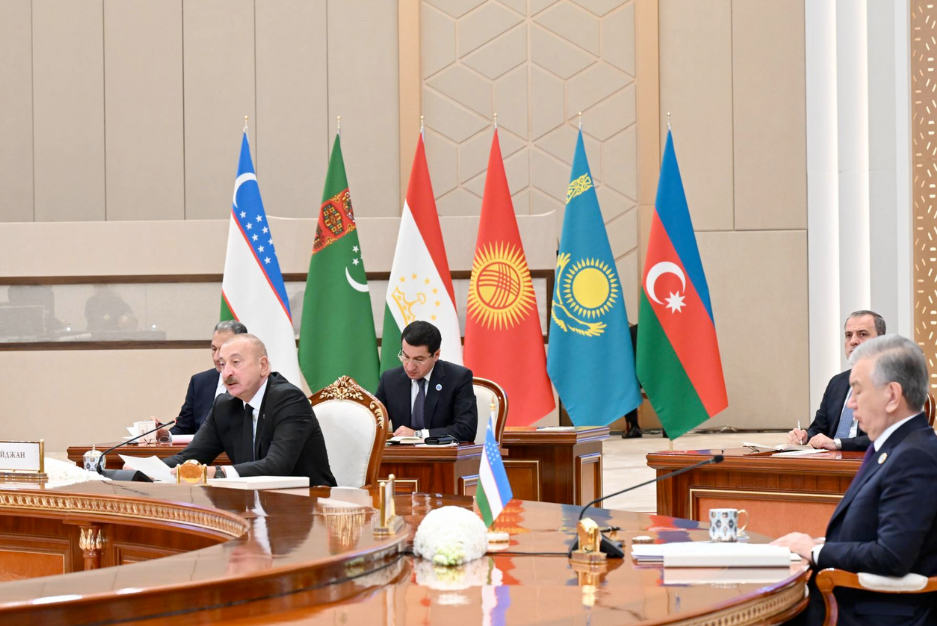
Azerbaijan’s entry into the C6 comes at a moment when the Black Sea and the Caspian are becoming more closely connected through transport, energy, and diplomatic initiatives. The new format gives political structure to a set of developments that were already unfolding in practice, from expanding port links to coordinated work on the Middle Corridor. This shift is directly relevant for the EU, which needs stable partners and predictable routes to implement its renewed Black Sea Strategy, a tool through which Brussels attempts at building resilience in the Black Sea in a way previous policies did not.
To understand why this matters, we need to look back. The EU’s earlier Black Sea Synergy, launched in 2007, aimed to foster regional cooperation across the littoral states, but it reproduced the common mistake of the period, which was to neglect the security dimension. Indeed, the Black Sea Synergy never successfully confronted the hard security questions that were becoming central to the region. Since then, the Black Sea space has endured three wars that altered its regional balance, and that enabled Russia to widen its strategic reach and to strengthen its presence across multiple fault lines, while at the same time undermining fragile regional institutions and cooperative formats. The 2025 strategic approach therefore does something different. It brings security and resilience to the centre of policy, and it treats connectivity as a tool within a broader agenda of sustainable growth and prosperity for the region.
The EU document frames the 2025 Black Sea Strategy around three main priorities. First comes security and resilience, with a clearer attention to maritime situational awareness, hybrid threats, and the resilience of critical infrastructure. Second, the strategy seeks sustainable growth and prosperity, and within that, the Connectivity Agenda is an instrumental plank to weave transport, energy, digital, and trade solutions across the Black Sea, the Caspian, and beyond. Third, the strategy integrates climate resilience and environmental protection as essential to long term stability, because infrastructure and trade corridors will only endure if they are climate proof and environmentally sustainable. This is a crucial correction to earlier practice, in which economic objectives too often outpaced the political and environmental safeguards necessary for durable projects.
Seen from this perspective, Azerbaijan’s formal inclusion in an expanded C6 format is to be considered a key development because the country functions, in practice, as a key bridge across the Caspian.
Baku’s ports, its rail links, and its role in the Middle Corridor create the maritime and land interface that connects Central Asian production and supplies to the Black Sea gateways and, from there, to Europe. The Black Sea strategy signals Brussels’ expectation that transport and energy corridors must be conceived as cross regional systems rather than bilateral tracks, as suggested by the multiple times the two shores of the Caspian Sea are mentioned across the document. The strategy therefore gives policy weight to the view that Azerbaijan and Central Asia belong in the same connective space, and that coordinating their policies offers tangible returns.
This convergence between policy and practice is visible in the recent surge of events and forums that are building the connective tissue. In late November 2025, the Trans Caspian Transport Corridor and Connectivity Investors Forum met in Tashkent under the Global Gateway framework to mobilise private and public finance for corridor projects and to discuss concrete investments and regulatory harmonisation along the route. The forum followed the Third EU-Central Asia Economic Forum, also held in Tashkent that same week, which produced a series of deals and commitments on trade, green energy, and critical minerals. These episodes show that the idea of an integrated Europe-South Caucasus-Central Asia corridor seems to be an agenda being operationalised through investor engagement, trade dialogues, and institutional cooperation.
At the same time, Brussels has strengthened parliamentary and institutional engagement with Central Asian partners. In November as well as on December 1st, Kazakhstan and the EU held high level cooperation meetings in Brussels, and parliamentarians and delegation networks have intensified their exchanges on connectivity and regulatory alignment. That parallel diplomatic work is needed because long distance corridors depend as much on institutional harmonisation and rule of law as they do on concrete infrastructure.
What then are the realistic prospects of aligning the EU Black Sea Strategy, the C6 momentum, and private investment into deliverable projects? The immediate potential is practical and concrete. Upgrading port capacity on both shores of the Caspian, streamlining customs and transport documentation, enhancing multimodal terminals, and investing in interoperable rail standards would reduce transit times and costs and make the Middle Corridor competitive at scale. In energy, the coupling of renewable generation, electricity interconnectors, and critical minerals supply chains can support Europe’s transition while providing new export markets for Central Asian producers and value added for Azerbaijan as a transit and processing hub. Digital connectivity through fibre optic routes and secure data channels across the Caspian can open new forms of trade and services that are particularly valuable for landlocked Central Asian economies. Each of these sectors benefits from the fact that the EU is now offering a policy framework that links security, economic incentives, and sustainability which, if matched with predictable financing, can attract private capital.
There are nonetheless important caveats. The 2025 strategy is a strategic approach rather than a fully funded blueprint, and the EU emphasises that implementation will rely on existing instruments and Global Gateway mechanisms rather than a single new funding envelope. In this regard, piecemeal funding, mismatched timelines, and weak coordination could easily turn promising momentum into underfinanced projects and grey areas of responsibility. Moreover, geopolitics also remains a constraint, as rival external actors may react to a deeper European push into Eurasian corridors, and unresolved territorial disputes or local political tensions could delay or derail major works.
Azerbaijan’s entry into the C6 therefore consolidates the country’s role as the hinge between the Black Sea, the Caspian, and Central Asia, but more importantly, it gives the EU a coherent diplomatic partner through which its Black Sea Strategy can extend across the wider Eurasian corridor system.
This alignment does not duplicate what Brussels is already pursuing through sectoral partnerships with individual states; instead, it provides the political scaffolding needed to translate fragmented initiatives into a functioning architecture. If the current momentum continues, the Black Sea Strategy, the C6, and the Middle Corridor could create smoother connections and more predictable cooperation across the region.