

Armenia–Azerbaijan normalization process after the Armenian election: What comes next?
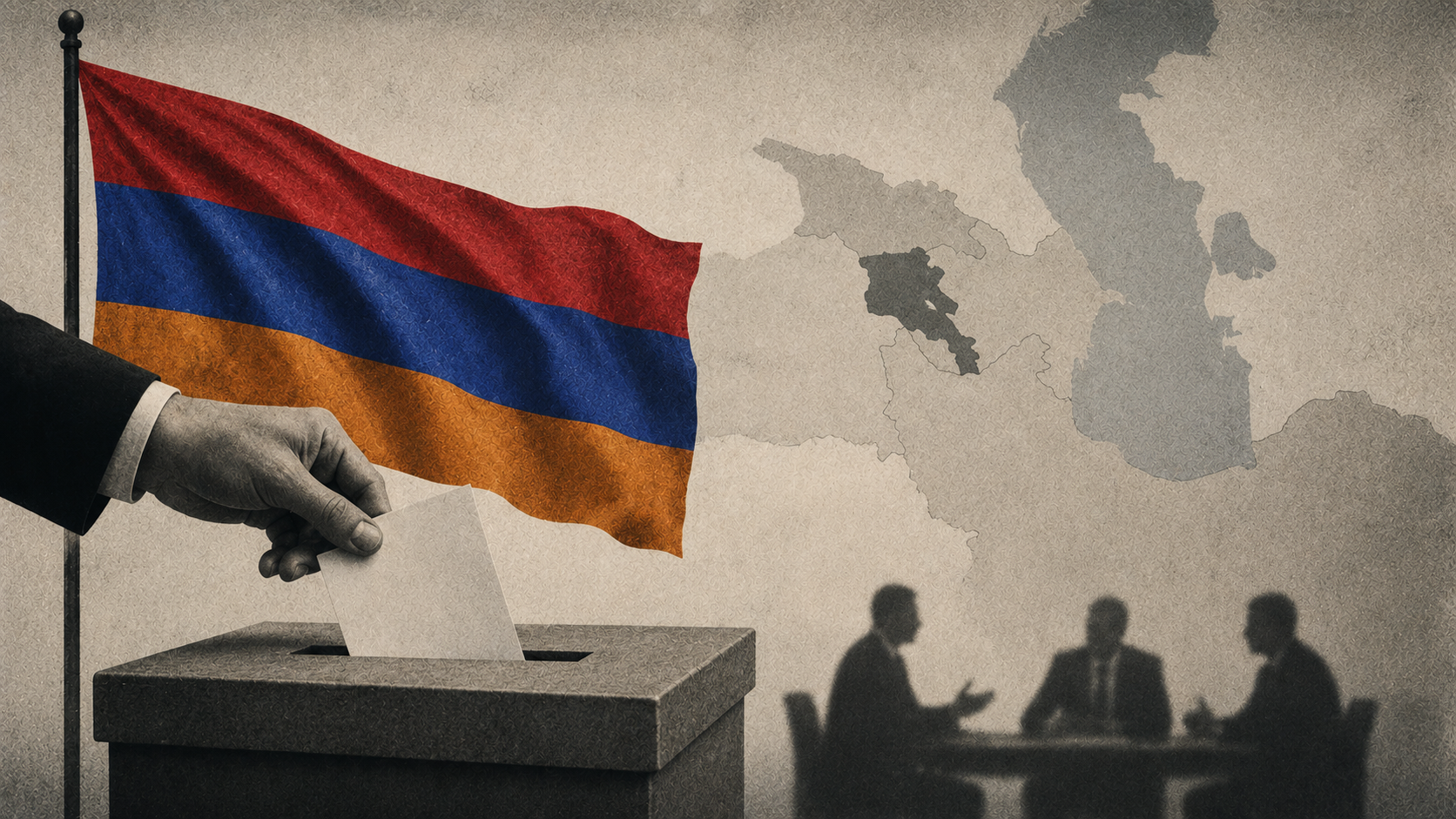
A year after the Washington summit that brought the Armenia–Azerbaijan peace process to its most significant breakthrough in decades, Armenia’s parliamentary elections have provided Prime Minister Nikol Pashinyan with a renewed mandate—but not an easy path to completing the process.
The 7 June 2026 elections produced a clear victory for Pashinyan’s Civil Contract party, which received slightly over 49% of the vote and secured a parliamentary majority. The result allows Pashinyan to form a government without coalition partners and confirms the continuity of his political course: pursuing normalization with Azerbaijan and Türkiye while moving Armenia closer to the European Union and the United States and gradually reducing its dependence on Russia.
Yet the election also exposed the limits of that mandate. Civil Contract did not obtain the two-thirds majority required for constitutional amendments. This is particularly significant because Baku has made changes to Armenia’s constitutional framework a central condition for moving from the initialled peace agreement to its final signing. The election therefore resolved one question—who will govern Armenia—but left another, potentially more consequential question unanswered: can Pashinyan secure the constitutional changes necessary to complete the peace process?
The issue is not merely legal or procedural. It goes to the question of how durable the peace settlement will be and/or the normalization will proceed. From Baku’s perspective, a bilateral peace agreement should not depend exclusively on the preferences of one government or one parliamentary majority. Anchoring the renunciation of territorial claims in Armenia’s constitutional order would provide greater certainty that the commitments undertaken today will survive future political change.
Is THE constitutional referendum (still) inevitable?
The immediate temptation for Yerevan will be to advance on those parts of the normalization agenda that are politically and institutionally easier while postponing the constitutional question. Some voices in Armenia and abroad – both before and especially after the parliamentary elections, when the results became known – have argued that the peace agreement could be signed first and that constitutional amendments could follow, potentially being addressed through a subsequent referendum. Others have questioned whether a constitutional referendum is necessary at all.
The position of the Azerbaijani side is clear. By dispatching Presidential Aide Hikmet Hajiyev to Dilijan—the first high-ranking foreign official to visit post-election Armenia—Baku demonstrated its continued commitment to the broader peace and normalization process. At the same time, Azerbaijan has reiterated, through statements by its leadership, another commitment from which it shows no intention of backing down: the removal from Armenia’s Constitution of provisions that Baku interprets as implying territorial claims against Azerbaijan.
The Armenian government must now find a politically viable way to address this demand. In theory, Pashinyan has two options. He could seek the support of opposition lawmakers to reach the parliamentary threshold required to initiate constitutional changes. Alternatively, he could seek to mobilize sufficient public support to take the issue to a referendum through the procedures provided under Armenian law. Neither path is straightforward. Securing opposition votes would require cooperation with political forces that have little incentive to help Pashinyan secure a major political victory. A referendum, meanwhile, would carry an even greater risk: by putting the constitutional question directly to voters, Pashinyan would also be putting his own political standing—and potentially his broader peace agenda—to the test.
Pashinyan could frame the constitutional amendments as the final institutional step toward peace with Azerbaijan and wider regional normalization. Yet a failed referendum would be politically costly, potentially weakening the government's authority at precisely the moment when it needs to negotiate the final stages of a settlement. Nor is a successful referendum assured. The two opposition forces now represented in parliament together command more than one-third of the vote, giving them sufficient weight to make a referendum genuinely competitive. The campaign could therefore evolve well beyond the narrow question of constitutional amendments, becoming a broader verdict on Pashinyan's foreign policy, Armenia's relations with Russia, the legacy of the Karabakh conflict, and the country's increasingly close relationship with the West, almost the third time since 2021.
The stakes are particularly high because Pashinyan's political standing, while strong enough to secure another electoral victory, is no longer what it was during the 2018 Velvet Revolution—or even after the 2021 parliamentary elections. He therefore faces a delicate calculation: the constitutional amendment may be necessary to secure a durable peace with Azerbaijan, but the process of achieving it could harm his legitimacy and could itself expose the political vulnerabilities that make the peace process more difficult to complete.
There is also an important unanswered question on the Azerbaijani side: what would Baku do if the Armenian public rejected the proposed constitutional changes? Azerbaijan has consistently presented the constitutional issue as a prerequisite for signing the peace agreement. Yet the consequences of a failed referendum remain unclear—not only for the signing of the agreement itself, but for the broader normalization process.
It is equally uncertain how the two sides would seek to move forward under such circumstances, or whether they would need to redesign the existing framework for peace and normalization to accommodate a new political reality.
(At least) Four tracks of normalization
The constitutional question should not, however, obscure the broader picture. The Armenia–Azerbaijan normalization process is not a single negotiation conducted around a single table. It has developed along several interconnected tracks, and progress on some of them can continue even while the most politically sensitive issue remains unresolved.
The first track is the peace agreement itself. The process reached a historic milestone in August 2025, when the foreign ministers of Armenia and Azerbaijan initialled the agreed text of the Agreement on Establishment of Peace and Inter-State Relations in Washington, in the presence of U.S. President Donald Trump, Azerbaijani President Ilham Aliyev and Armenian Prime Minister Nikol Pashinyan. The accompanying trilateral Washington Joint Declaration signed by the leaders emphasized the need for further steps toward the signing and ratification of the agreement.
In practical terms, the substantive negotiations have largely been completed, and the only major obstacle to the formal signing of the agreement is the much-discussed constitutional referendum outlined above. The remaining challenge is to transform the initialled text and the political commitments made in Washington into a formally signed, ratified and sustainable peace.
The second track is border delimitation and demarcation. The two countries have been working on this topic through bilateral commission co-chaired by the deputy prime ministers. While the process is highly technical, it is far from being merely a low-profile component of normalization. Although only around 12 kilometres of the approximately 1,000-kilometre-long border have so far been formally delimited and demarcated, the process has already produced tangible results, including the handover of several Azerbaijani villages in 2024.
The work of the commission has also gone beyond the technical determination of border lines. Their members have conducted reciprocal visits, both to areas directly along the border and to locations deep inside each country, providing opportunities to address practical problems on the ground. These interactions serve as important confidence-building measures and help establish channels of communication that can prove crucial in managing potential disputes. Ultimately, every mutually agreed section of the border reduces the physical and political space for renewed confrontation and creates a more predictable environment for future transport, security, and economic cooperation.
Importantly, both sides understand that completing the delimitation and demarcation of the entire border will be a lengthy process, potentially taking years, if not decades. This means that bilateral engagement on the border will necessarily continue regardless of whether the peace agreement is formally signed in the immediate future. In this sense, the work of the commissions has a significance that extends beyond the peace treaty itself: it represents a long-term institutional mechanism through which Armenia and Azerbaijan will have to manage their shared border and address practical issues for years to come.
The third track is connectivity. Both sides increasingly recognize the economic and strategic value of reopening regional transport links. Yet their priorities are not identical. Armenia has generally emphasized the simultaneous opening of regional communications, while Azerbaijan places particular emphasis on connectivity between mainland Azerbaijan and the Nakhchivan exclave through Armenian territory, within the framework agreed in Washington. With the envagement of the Americans, the TRIPP initiative has consequently become a central component of this agenda.
Importantly, the overall connectivity between Armenia and Azerbaijan should not be understood simply as a railway or highway project. The emerging framework encompasses a broader connectivity architecture that could include transport infrastructure, digital connectivity, electricity transmission and potentially other forms of economic infrastructure.
The fourth track is economic cooperation. Even before a formal peace treaty has been signed, practical forms of economic interaction have begun to develop. Azerbaijan has lifted the decade-long restrictions on Armenia-bound cargo transiting its territory, allowing goods from Russia and Kazakhstan to reach Armenia through Azerbaijan. Since late 2025, Azerbaijan has also begun supplying fossil fuels to Armenia, although these deliveries continue to transit through Georgia. The relevant ministries on both sides have also been discussing additional categories of commodities (e.g. construction materials) that could potentially be included in future trade.
In purely commercial terms, the current volume of trade remains limited, and some of these arrangements may not yet be particularly profitable. Their significance, however, should not be measured solely by immediate economic returns. At this stage, the objective is also to establish another functioning track of normalization and lay the initial foundations for economic interdependence between the two countries. Even modest and commercially suboptimal exchanges can create practical habits of cooperation, establish channels between institutions and businesses, and gradually demonstrate the tangible benefits of a more open bilateral relationship. In this sense, economic normalization does not necessarily have to wait for complete political normalization; rather, limited economic interaction can itself become an instrument for building the conditions for a more durable peace.
This track could also be expanded beyond government-level discussions through direct engagement between the business communities of the two countries. Bringing Armenian and Azerbaijani businesspeople together could help identify areas of mutual commercial interest, explore new opportunities, and generate practical proposals that governments may not have considered. Such contacts could, in turn, open additional horizons for economic cooperation and give the normalization process a stronger private-sector dimension.
The defining feature of the current Armenia-Azerbaijan normalization is its multi-track nature. By advancing this normalization through several separate but interconnected tracks, the two sides reduce the risk that a setback in one area will bring the entire process to a standstill.
At the same time, progress on one track can generate momentum on others, building confidence, creating new incentives for cooperation, and producing positive spillover effects across the broader normalization agenda.
The four tracks are therefore deeply interrelated, but each retains its own pace and a degree of operational autonomy. This combination of interdependence and flexibility has become one of the key sources of resilience in the Armenia–Azerbaijan normalization process. It also means that the absence of a formally signed peace agreement does not necessarily prevent practical progress elsewhere—a dynamic that may prove particularly important if the constitutional question remains unresolved for some time.
TRIPP and the wider geopolitical equation
The future of the Trump Route for International Peace and Prosperity (TRIPP) will be particularly important for the broader normalization process, but its prospects cannot be assessed solely through the lens of Armenia–Azerbaijan relations. The initiative has acquired a geopolitical dimension that extends well beyond the two countries, largely because of the unprecedented involvement and political patronage of the United States.
The framework agreement signed by Armenia and the United States in 2026 envisages the establishment of a joint venture to facilitate the implementation of TRIPP and allows the project entities to select third parties to participate as concessionaires, sponsors, operators, contractors, and engineering, procurement and construction providers. Azerbaijan’s geographical position makes its territory a natural logistical gateway for equipment, construction materials, and other supplies required for infrastructure development in southern Armenia. Azerbaijani companies could also potentially participate directly in the construction of TRIPP and related infrastructure. Having already completed the local segment of the railway up to the Armenian border, Azerbaijani companies possess the relevant technical experience, equipment, and operational capacity to continue their work across the border in Southern Armenia as part of the TRIPP project and further in Nakhchivan. Such involvement could be particularly logical from both an economic and engineering perspective, given the geographical continuity of the route and the need to ensure compatibility between the infrastructure on both sides of the border. This could make Azerbaijani participation not merely expedient and cost-effective, but strategically relevant to the coherence and eventual functioning of the broader connectivity project.
Moreover, the infrastructure planned along or near the Armenia–Azerbaijan border will require a stable and clearly delimited territorial environment. Progress on the project could therefore create an additional incentive for the two sides to accelerate the delimitation and demarcation of the relevant sections of their border. Conversely, successful agreement on these strategically important sections could generate momentum for completing the delimitation of the remaining parts of the border.
Yet the very feature that makes TRIPP strategically significant—direct U.S. involvement—could also become its greatest vulnerability.
Iran has consistently objected both to the proposed infrastructure arrangements and to an expanded American role in the South Caucasus. From Tehran’s perspective, a U.S.-backed transport and infrastructure project immediately north of Iran could be perceived not simply as an economic initiative but as part of a broader expansion of American strategic influence in the region. The ongoing U.S.–Iran confrontation only reinforce these concerns.
This creates a fundamental security dilemma for TRIPP. Even before any infrastructure is physically constructed, the project itself has become politically significant enough to attract Iranian attention. In the context of an ongoing or renewed military confrontation between Iran and the United States, TRIPP could therefore face security risks disproportionate to its physical footprint. The vulnerability would not necessarily disappear with the end of the current conflict. A ceasefire or eventual settlement may reduce the immediate risk of military escalation, but it is unlikely to eliminate Tehran’s broader concerns about the project and the role of the United States behind it.
Iran could consequently seek to obstruct or complicate the implementation of TRIPP through a range of political, economic, or security instruments. Nor can the possibility of coordination with Russia be entirely dismissed. Moscow has its own concerns about the changing geopolitical balance in the South Caucasus and the growing involvement of the United States in a region traditionally regarded as part of Russia’s sphere of influence.
This does not mean that TRIPP is destined to fail. Rather, its success will depend on whether the project can evolve from a predominantly geopolitical initiative into a genuinely regional connectivity project with sufficient economic value and a sufficiently broad set of stakeholders. The greater the number of actors that benefit from TRIPP—including Armenia, Azerbaijan, the United States, Türkiye, European markets, and potentially other regional economies—the greater the political and economic cost of attempting to derail it.
In this sense, TRIPP represents both an opportunity and a test for the wider peace process. If successfully implemented, it could transform the Armenia–Azerbaijan border from a zone of confrontation into a corridor of connectivity and interdependence. But for that to happen, the project will have to navigate not only the technical and political challenges of normalization between Yerevan and Baku, but also the much broader geopolitical competition unfolding around them.
What the election changes—and what it does not
The Armenian election has therefore neither restarted the peace process nor brought it to completion. It has done something more limited but still important: it has clarified the political landscape in Armenia.
Pashinyan remains the dominant political actor, and his government now has a fresh electoral mandate to continue the normalization agenda. For Azerbaijan, this is arguably the most important immediate outcome of the election. A change of government could have introduced uncertainty into a process that has already accumulated considerable political capital and produced an initialled agreement.
But continuity should not be confused with resolution.
The election has left Pashinyan with a parliamentary majority but without the constitutional supermajority that would allow him to address the issue at the heart of Baku’s remaining objections without broader political support. This creates a paradox. The electoral result strengthens the Armenian government politically, while simultaneously making the next stage of the peace process more dependent on consensus beyond the ruling party.
This may ultimately prove to be an opportunity rather than only an obstacle. If the peace process is to become genuinely durable, it cannot remain solely the project of one political force. A settlement supported—or at least accepted—by a broader segment of Armenia’s political establishment and society would be more resilient to future electoral change.
The coming months will therefore test not only Pashinyan’s political skills but also the flexibility of both sides. Baku will have to decide how much progress can be generated through the non-constitutional tracks while maintaining its position on the constitutional issue. Yerevan, meanwhile, will need to determine whether it can reconcile domestic political constraints with the demands of completing the peace process.
A year after Washington, the basic architecture of peace is considerably more developed than it was before the summit. The challenge now is to convert that architecture into an irreversible political reality.