

Moscow’s pipeline blackmail: Lessons from the Druzhba Blockade and the need for infrastructural sovereignty
A Calculated Impasse
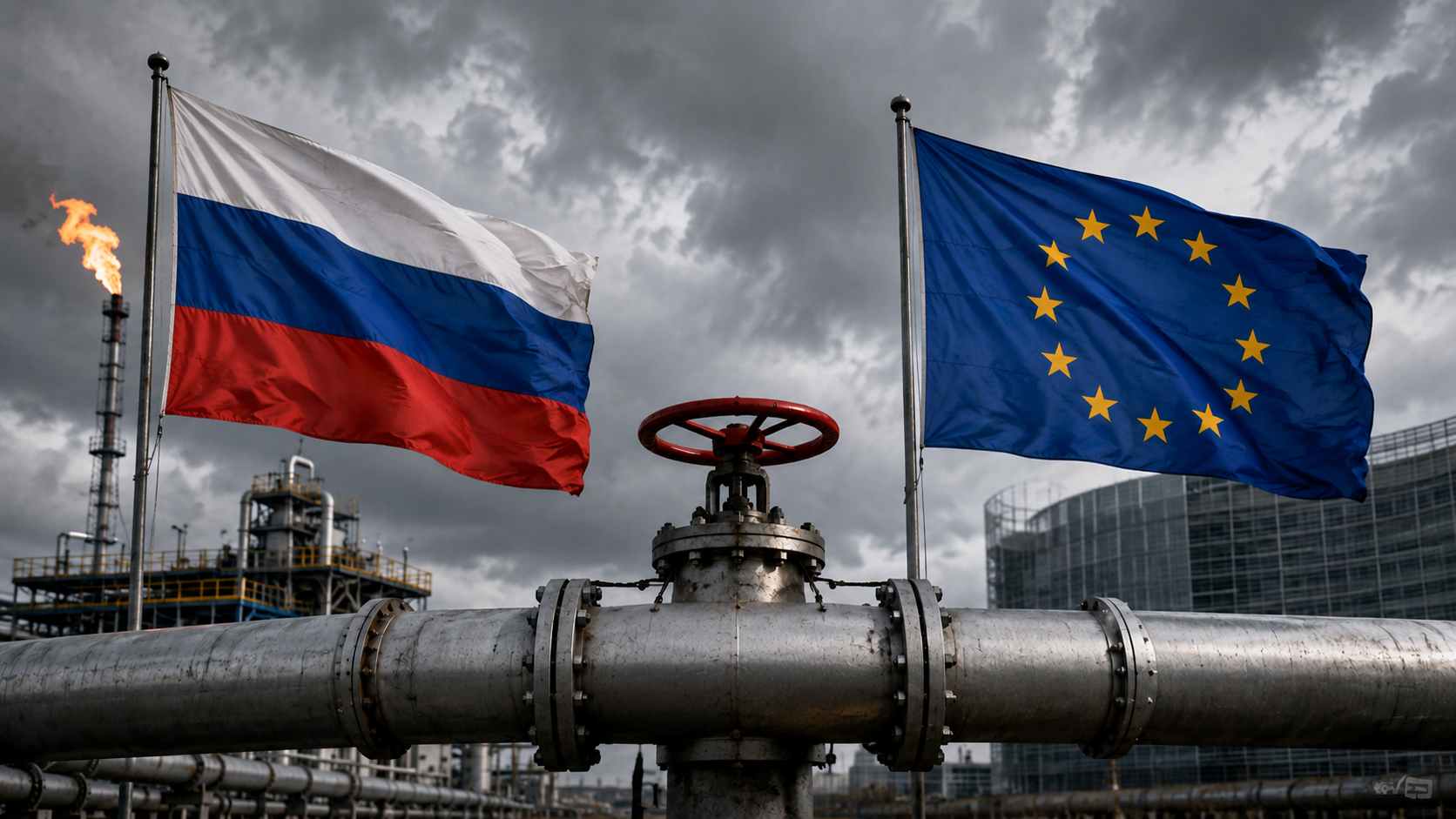
On April 22, 2026, Russian oil started flowing again through the Druzhba pipeline to Europe, with reparations works handled by Ukrainians after a rupture amidst the events of the war. Yet, after a series of reports, it was confirmed that Russia would halt the passage of Kazakh oil sent to Germany through the newly reopened pipeline after May 1 due to a “a lack of technical capability” brought by new attacks.
The Druzhba pipeline fuels directly into Germany’s largest refinery PCK Schwedt, seized from Russian company Rosneft in 2022, with Kazakh oil specifically accounting for 12% of the country’s national need and 17-20% of the refinery’s demand. While Kazakhstan announced the redirection of the fuel to alternative routes, encompassing the Ust-Luga Port and the Caspian Pipeline Consortium, it became clear to experts that this event might become another example of Russia’s tradition of using its energy transportation monopoly as a weapon. The PCK Schwedt refinery is dependent on the oil flows coming from Druzhba, as it was built just for converting crude oil from that source during Soviet times: the stop implies importing the oil from nearby ports like Gdansk at a much higher price, which could hit hard on the German economy considering that the refinery supplies 90% of gasoline, jet fuel, diesel and fuel oil in the key regions of Berlin and Brandenburg.
The geopolitical context of this development is critical. Driven by a steady expansion of exports throughout 2025, which saw volumes reach 2.1 million tons, the energy partnership between Astana and Berlin was solidified by the signing of an agreement in 2023 and various declarations by the energy ministries in 2024 about doubling the imports. By committing to an ambitious export target of 2.5 million tons for 2026, Kazakhstan effectively transformed from a secondary supplier into a rival to Russian energy interests on German soil.
Consequently, Moscow found itself in a paradox: it was forced to maintain and operate a section of the Druzhba infrastructure that exclusively served a regional competitor and a customer that was openly seeking to finalize its energy decoupling from the Kremlin. The May 1st blockade may come as a calculated act of energy blackmail aimed at jeopardizing German efforts for diversification.
The Historical Pattern of Debt Weaponization
As a proof to this possibility, a similar maneuver happened after the start of the war in Ukraine. Subsequent to a phone conversation between Kazakh President Tokayev with Council President Charles Michel, where he stated that his country was ready to act as an oil “Buffer Market” for supplies to the European grid, a Russian court suspended the flow through the Caspian Pipeline Consortium in the port of Novorossiysk for 30 days due to "environmental concerns.” Furthermore, earlier the port was being closed for various different reasons: firstly, the flow was halted due to repair damages brought by a storm, with various international observers noticing that the amount of damage didn’t correspond to Russia’s declarations and thus the port shouldn’t have been closed that long, and secondly, it was closed to demine it from newfound “WW2 naval mines.”
Historically, this disruption comes as a continuation to a strategy that tends to always follow the same pattern of blackmail, which Russia has been using to punish strategic autonomy of post-soviet countries while pushing for its own interests in Europe. The historical precedent was set during the fall of the Soviet Union, where the government cut completely crude oil and 80% of natural gas exports to Lithuania to deter the other Baltic nations from following its independence path.
But later the strategy consolidated around the repayment of debt: even if technically autonomous, the Russian company Gazprom has the government as its major stakeholder with 51% of the shares owned, thus acting under its guide to strategically use the debt accumulated by importers as a geopolitical weapon. A large variety of countries have accumulated debt with the company, and while requiring the payments remains in the rights of Gazprom, it has been demonstrated that those tend to be used as a pretext to impose Russia’s political agenda to its neighbors.
This operational pattern was first observed during 2004 in Belarus over the refusal of further integration with the Russian Federation, a case that was reiterated in 2007 and 2010 and later codified through the blockages during 2006 and 2009 in Ukraine and in Moldova in 2024 regarding efforts of opening towards the European Union. This form of Debt-Trap Diplomacy, based on the Asymmetric Dependence of those countries to Russia, has demonstrated that the Kremlin prefers to maintain huge debts instead of asking for repayment, as they can be used as a political leash.
The effects of this form of political leverage are usually mixed. While in the short term their objectives might be obtained, with countries partially giving in to the demands, in the long run it has led to diversification of fuel imports. Moldova, as an example, has to this day eliminated Russian gas from its energy imports, moving to imports of GNL from the Trans-Balkan Pipeline.
Bypassing the Monopoly
The weaponization of the Druzhba line serves as a definitive validation for stronger investments in interconnectivity. The recurring disruptions at the CPC terminal and the recent shutdown of the Druzhba line have come to demonstrate that independence from Russian pipelines has become a need of national survival. Azerbaijan emerges here as the indispensable partner. The Baku-Tbilisi-Ceyhan (BTC) pipeline, which accommodates the increasing volumes of Kazakh KEBCO crude oil, represents a new buffer where the new energy needs of Europe could be met. Even if the capabilities are still limited, the passage of small and medium sized tankers on the Caspian allows support over the new route. By bypassing Russian territory, the Trans-Caspian route offers Kazakhstan a degree of Infrastructural Sovereignty that Moscow is attempting to preempt. The previous blockades can be interpreted as a Russian signal that any permanent shift toward other pipelines and a movement favorable to Europe will be met with immediate strangulation of remaining northern routes.
From the European perspective, the PCK Schwedt refinery situation highlights the lingering scars of energy dependency. While Berlin has made strides in diversifying its energy mix, the Kazakh share represents a relevant part of the country’s internal energy stability. However, this "blackmail" is yielding diminishing returns. Unlike at the start of the war in Ukraine, Europe’s infrastructure is now more resilient, and its political will more hardened. The redirection of Kazakh oil to Ust-Luga, though still within Russian reach, is a temporary solution. Even in a post-war reopening to Russia, the solution lies in upkeeping diversification volumes and avoiding the reestablishment of an energy transport monopoly.