

Georgia’s Approach to Abkhazia and South Ossetia: A Growing Gap Between Policy and Objective
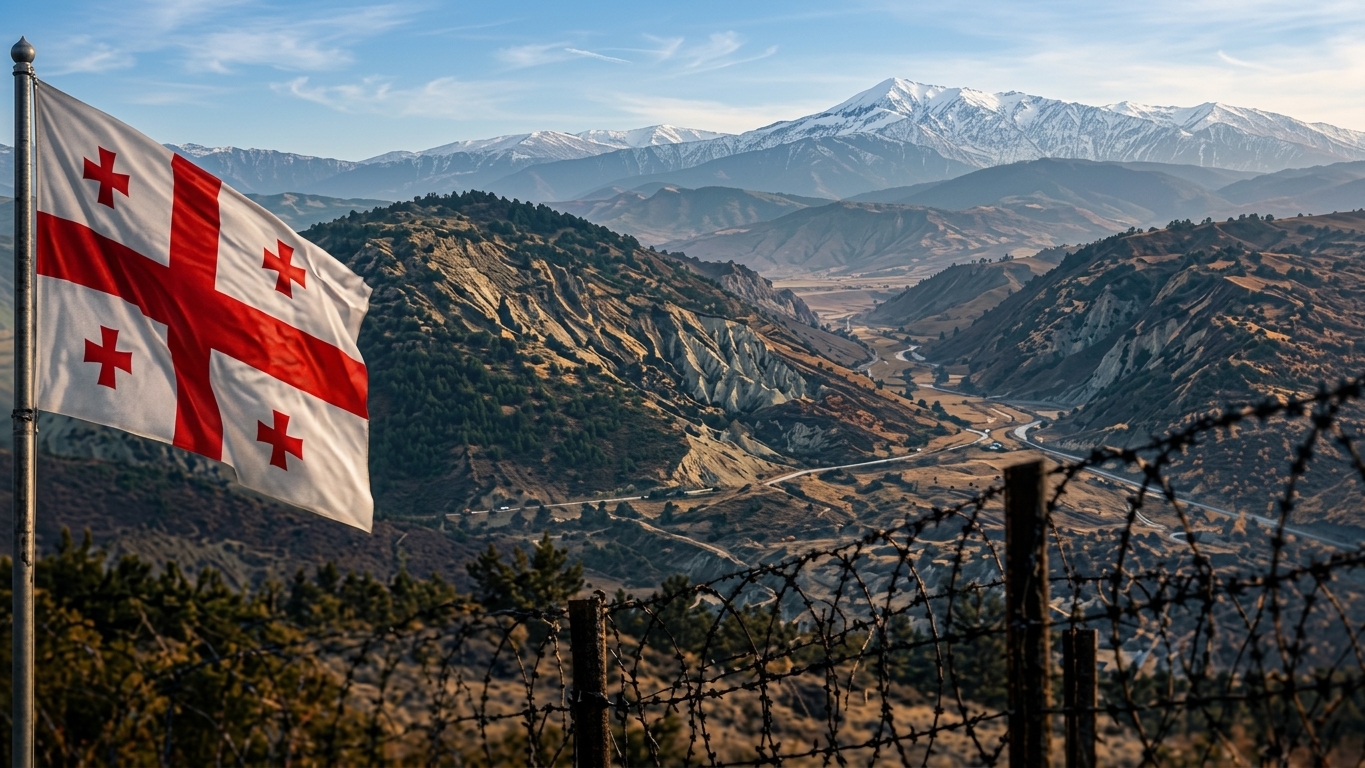
Among the diverse regions of the former Soviet Union, the Caucasus is perhaps the one most often associated with historic territorial disputes and conflict due to its complex geography. While there has been substantial progress in the Armenia-Azerbaijan dispute, the conflict in Abkhazia and South Ossetia has remained unresolved for more than three decades. Even though Georgia has continued to claim both territories as part of its sovereign territory and formally supports their peaceful reintegration, Russia and the de facto authorities have continued to strengthen the political, economic and military foundations of the existing status quo. Russian military bases remain in both territories, cooperation with Moscow continues to deepen, and the two regions have developed further ties with Russia while maintaining their separate political structures.
At the same time, Georgia's current approach has done little to improve the conditions for resolving the territorial disputes in its favor. Tbilisi continues to rely primarily on diplomacy, peaceful conflict resolution and international support, while its military capabilities and Western integration have not developed at a pace sufficient for the country to improve its leverage on the issue. Therefore, the current problem is that Georgia's stated objective and its current policy trajectory are increasingly out of step with the changing conditions on the ground, leading the country dangerously farther away from achieving the restoration of its territorial integrity.
Contrary to what some may think, problems in Abkhazia and South Ossetia did not begin in 2008. Tensions between the Georgian government and separatist movements in the two regions as Georgia moved toward independence from the Soviet Union were at the center of the conflict. In the early 1990s, fighting resulted in Georgia losing control over both territories. The situation changed significantly in 2008, when fighting between Georgian forces and South Ossetian forces escalated into a broader war involving Russia. The involvement of the northern neighbor resulted in Georgia losing further territory around the existing conflict zones. Following the war, Russia recognized Abkhazia and South Ossetia as independent states and established a lasting military presence in both. As a result, more than 20% of Georgia's internationally recognized territory remains outside the control of the Georgian government. However, the two regions have not remained static, and their current trajectory and integration with Russia paint an unfavorable picture for Georgia's hopes of reclaiming them in the near future.
Over many years, Russia has endeavored to deepen its role in the two regions and expand its existing influence.
The Kremlin's attempts to optimize its control in Abkhazia and South Ossetia have become all the more potent, even as its influence elsewhere is arguably declining following the invasion of Ukraine.
First Deputy Chief of Staff of the Presidential Administration Sergey Kirienko, in his role overseeing the Kremlin's relations with Abkhazia and South Ossetia, has allegedly adopted a "heart and minds" approach to strengthening Russia's authority in the two regions, together with other officials close to the Russian government. Moscow is already funding a significant part of the regions' budgets and maintains a substantial military presence, although its influence in South Ossetia is somewhat greater than in Abkhazia.
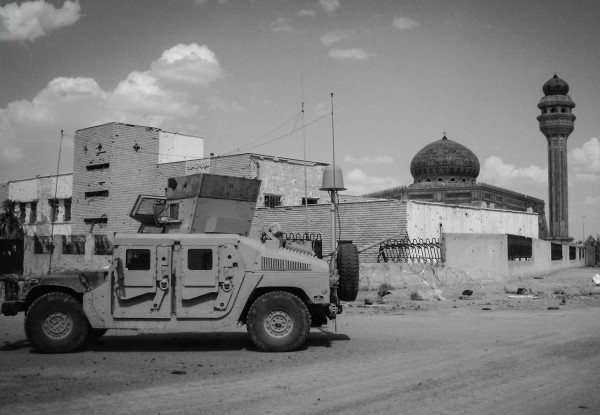
Perhaps one of the most important elements of Russia's presence in Abkhazia is the 7th Military Base in Gudauta. The base is home to several thousand soldiers, as well as a number of tanks, other armored vehicles and air defense forces. Russian personnel from the 7th Base also participate in the development of Abkhazia's own military capabilities. In late 2025, Abkhazia's military forces conducted tactical military exercises, where they trained together with Russian military personnel. A similar future exercise involving Russian forces was announced shortly afterward.
Importantly, during his visit to the site of those same exercises, Abkhazia's President Badra Gunba underlined the importance of being prepared to counter revanchist threats – most likely referring to the Georgian government. In his recent meeting with Sergey Kirienko, President Gunba also discussed plans for future infrastructure projects with Moscow's assistance and reaffirmed his commitment to developing bilateral relations. This pattern suggests that Abkhazia is steadily developing its own military capabilities and continuing its alignment with Russia while explicitly framing Georgia's policies as a threat.
Russia's military involvement is arguably even more pronounced in South Ossetia. Similar to Abkhazia, Russia maintains its forces there mainly through the 4th Military Base. The base houses approximately 4,000 soldiers and various armored and artillery units. Additionally, 100 new soldiers were recently conscripted into Russia's military structure in the region. Russian personnel in South Ossetia continuously conduct exercises with different equipment and across different terrain, such as a recent exercise involving armored vehicles in mountainous terrain. Russian soldiers with experience in Ukraine are also training personnel at the 4th Base in the use of drones, giving them greater exposure to the realities of modern warfare.
South Ossetia is also actively receiving Russian development funding, bringing it closer to Moscow.
In a recent interview, Sergery Kirienko announced that the region will receive almost 1.5 billion Rubles from Russia for its development projects. Kirienko also announced Putin's personal decision to allow citizens of South Ossetia and its organization to participate in all Russian funding programs, with additional separate grants exclusively for individuals and groups of the region.
The government in Tskhinvali is also not afraid of directly challenging statements and policies of Georgia's government. A recent statement from South Ossetia's Ministry of Foreign Affairs strongly criticized Georgia's concept of its territorial integrity in the Istanbul Declaration, stating that South Ossetia is an independent state and has no connection with Georgia and its territorial integrity. Such tensions between the current governments of South Ossetia and Georgia make prospects of a peaceful resolution of the conflict highly complicated.
While the two regions Georgia considers occupied continue building military power and deepening their relationship with Moscow, Tbilisi's own approach has been rather confusing and underwhelming. Georgia continues to formally regard Abkhazia and South Ossetia as parts of its territory and maintains territorial reintegration as a core objective. At the same time, the government has made clear that it does not consider military force a means of resolving the conflicts.
Foreign Minister Maka Bochorishvili has described peace and stability as central to Georgia's strategic course, stating that the conflicts can only be resolved through peaceful means. Prime Minister Irakli Kobakhidze has similarly emphasized territorial integrity as a firm government objective, while arguing that Georgia's policy should focus on rebuilding trust with Abkhaz and Ossetian populations. The current approach therefore combines an unchanged territorial claim with a strong preference for peaceful resolution and avoidance of military confrontation.
Georgia's relationship with NATO, however, has shown considerably less progress. In July 2026, Georgia was absent from the NATO summit in Ankara, marking a significant change from previous years when Georgian officials regularly participated in summit-related partner events. NATO Secretary General Mark Rutte acknowledged in March that some areas of NATO-Georgia cooperation had been reviewed and that priorities had been redefined following developments in Georgia since the 2024 elections. While he stressed that NATO intended to maintain relations with Georgia, he also called on Tbilisi to return to a more European-oriented trajectory. Georgia therefore continues to formally attach importance to its relationship with NATO, but there has been no meaningful progress toward membership and its access to the alliance's political and security discussions has weakened.
The decline has been even more pronounced in Georgia's EU accession process. Georgia received EU candidate status in December 2023, but the accession process was already considered halted by the EU in 2024 amid concerns over democratic reforms. In November 2024, Kobakhidze announced that Georgia would not pursue the opening of accession negotiations until the end of 2028, while still stating that the country ultimately sought EU membership. The December 2025 Council conclusions stated that Georgia would remain in this position until its authorities demonstrated a firm commitment to reversing course, while the EU ambassador in July 2026 stated that Georgia was not among the countries currently progressing toward membership. In response, The Georgian government has increasingly criticized EU's policies and called out what it describes as the Union's own democratic backsliding in an open letter.
Tbilisi's approach toward relations with Russia is of particular importance. While framing the current government as "pro-Russian" is an overstatement, there has clearly been a shift toward pragmatism in relations with Moscow. Georgia refused to take part in Western sanctions against Russia following the invasion of Ukraine and passed legislation closely resembling the one adopted in Russia and limiting opposition and NGO activity. Additionally, trade relations with Russia saw a 21% increase in 2026, while Russian tourism remains significant. While this pragmatic approach may be rational for Georgia's broader economic and security interests, it does little to advance its position on Abkhazia and South Ossetia.
Georgia remains relatively passive while Russia and the de facto authorities continue actively strengthening their political, economic and military positions, gradually making reintegration more difficult.
Meanwhile, Georgia's military development has been relatively unimpressive. The size of the army has remained practically unchanged for some years and has been kept at 37,000 soldiers for 2026. Importantly, there is evidence to suggest that Georgia has been largely unsuccessful in developing capabilities that are crucial in modern warfare and are actively being adapted by militaries across the region. The forces and equipment demonstrated at this year's military parade were also significantly more modest compared with those of neighbors such as Azerbaijan and Armenia. While an aggressive military build-up by itself is not a solution to the conflict, it could provide another source of meaningful leverage that Georgia is currently missing.
Finally, a brief comparison between Georgia and Azerbaijan can be drawn in this context. Like Georgia, Azerbaijan faced the occupation of internationally recognized territory following the collapse of the Soviet Union. However, Baku responded by firmly maintaining its position on the return of its occupied territories while simultaneously building a formidably capable military by regional standards. After more than two decades of pursuing a peaceful resolution, the end of the conflict finally came through a combination of war and consistent diplomatic efforts, rather than mediation by foreign governments. Of course, neither the two countries nor their situations are entirely comparable, and the more direct involvement of Russia in Abkhazia and South Ossetia makes this conflict much more complicated. The point, however, is that Georgia's neighbor was able to resolve the occupation of its territories by building leverage and following a consistent and firm policy toward its adversary. It remains to be seen whether Georgia will do the same.
Georgia’s stated objective of restoring its territorial integrity increasingly contrasts with the trajectory of the country’s policies and the changing conditions on the ground. Tbilisi continues to favor peaceful resolution, maintain its territorial claims and pursue international support, but its relationship with NATO and the EU has weakened while its military development has remained limited. Its pragmatic approach toward Russia may be reasonable from a broader economic and security perspective, but it provides little leverage on the territorial issue.
Meanwhile, Abkhazia and South Ossetia continue to strengthen their military capabilities, deepen political and economic ties with Moscow, and reinforce their separate political identities. Russia remains deeply involved in both regions through military bases, training, funding and political oversight, making the existing status quo increasingly entrenched. Georgia therefore faces a difficult situation: while it avoids confrontation and preserves its broader national interests, its opponents are actively strengthening their positions. Unless Tbilisi finds ways to build meaningful political, military or diplomatic leverage, the gap between its goal of territorial reintegration and its ability to achieve it is likely to continue growing.