

Iranian drone hit Azerbaijan: What now?
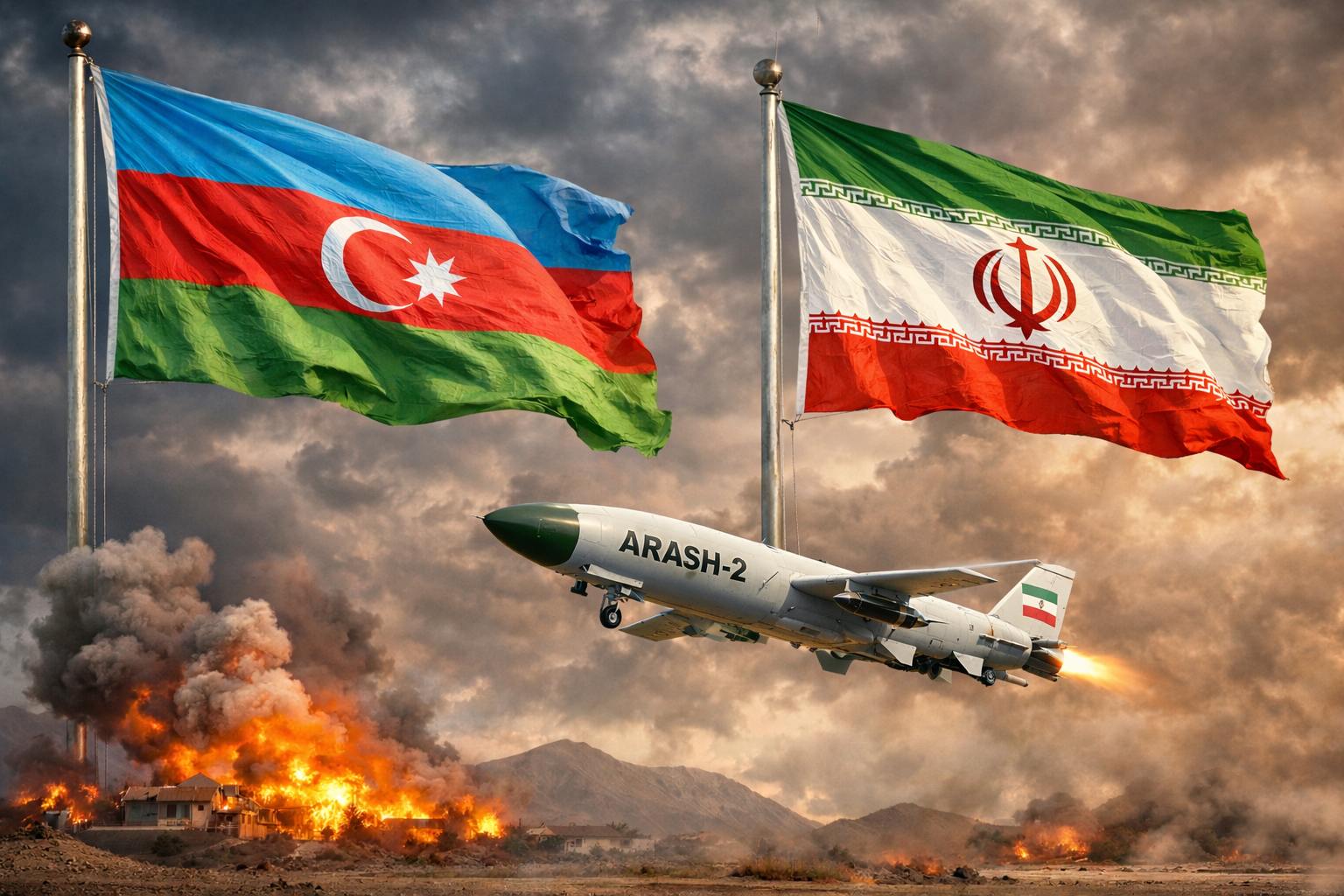
Iranian Arash-2 drones hit an airport and landed near a school in Azerbaijan’s Nakhchivan exclave on March 5, marking a significant tension in Baku-Tehran relations. The drone attack came on the heels of an expanding theater of war between Iran and the U.S.-Israel forces, as Tehran has increasingly targeted civilian and energy infrastructure across the Gulf in an effort to pressure Washington into accepting a ceasefire. Azerbaijan’s leadership condemned the incident as a “terrorist attack” and vowed to retaliate. The Iranian side, however, denied the involvement of its armed forces and launched an investigation.
As the drone attack on Azerbaijan may open a new front in the north, it raised questions about the strategic rationale behind the move. Unlike the Gulf states targeted in recent strikes, Azerbaijan does not host U.S. or Israeli military bases on its territory. In a phone call on March 1, Azerbaijan’s foreign minister assured his Iranian counterpart that Azerbaijani territory would not be used by any country to launch attacks against Iran.
Yet the strike risks provoking retaliation from Baku that could spiral into a broader crisis between the two neighbors, potentially drawing in Turkey, an outcome Tehran would likely prefer to avoid.
Moreover, expanding the war to the north could put the spotlight on Iran’s Azerbaijani population at a time when the country is already facing mounting pressure from U.S.-backed Kurdish consolidation along its northwestern frontier.
One explanation may lie in the evolving dynamics of Iran’s military decision-making. Over the recent years, Tehran has increasingly relied on a more decentralized “mosaic defense” doctrine that disperses authority across multiple operational units and commands. The Islamic Revolutionary Guard Corps maintains 31 provincial units across the country, each with remarkable operational autonomy designed to ensure that military operations can continue even if command structures elsewhere are disrupted. While designed to ensure resilience during wartime and avoid Iraq or Syria-style failure vis-a-vis a foreign attack, this more horizontal command structure can also blur lines of coordination between the political leadership and the IRGC. The pattern has already been visible in recent attacks attributed to Iranian forces against Oman and Turkey. In this environment, diplomatic signals from Tehran do not always translate into restraint on the ground. Azerbaijan has faced this duality before.
After the Second Karabakh War in 2020, periods of constructive dialogue between Baku and Tehran were repeatedly undermined by escalatory moves from the IRGC along the border.
What makes the current moment far more dangerous is that these frictions now unfold amid a widening regional war, where miscalculation could trigger far more serious consequences for regional security.
The shift in Iran’s threat perception toward Azerbaijan was already visible even before the U.S. and Israeli attacks on Iran on February 28. In the aftermath of the twelve-day war in June 2025, Iranian accusations largely centered on unfounded claims that Baku had allowed Israeli drones or aircraft to use its airspace to strike Iranian targets. On the eve of the current war, however, the threshold had already been lowered. Hardline voices increasingly argued that Azerbaijan was indirectly contributing to Israel’s security through the Baku–Tbilisi–Ceyhan oil pipeline. This argument was articulated on January 23 by Fars News, an outlet affiliated with the IRGC, which described the BTC pipeline as a strategic element of Israel’s security chain and suggested that it could become a legitimate target if Azerbaijan did not reconsider its cooperation with Tel Aviv. As the hardline figures see their influence grow, these narratives move from ideological messaging into the highest levels of Iranian decision-making, raising the specter of a more confrontational Iranian posture toward Azerbaijan.
In response to Iran’s drone attack, Azerbaijan faces the challenge of striking a fine balance between signaling deterrence and strength while avoiding being drawn into a regional war with potentially dire consequences.
On the one hand, Baku may calculate that failing to respond firmly could signal weakness and invite further attacks from Iran. It was a similar logic that guided Azerbaijan’s proportional responses to Iran’s military posturing along their shared border in 2021 and 2022.
On the other hand, Baku has strong incentives to avoid climbing further up the ladder of escalation. In this context, Baku’s demand for an official apology from Tehran may serve as both a signal of resolve and a potential diplomatic off-ramp, buying time for both sides to reassess their next moves and prevent the crisis from spiraling further.
So far, Azerbaijan has taken two steps that signal grievance while imposing cost on Tehran. First, Baku has begun evacuating its diplomatic personnel from Iran, including staff from the embassy in Tehran and the consulate in Tabriz. The move effectively returns bilateral relations to the low point reached in January 2023, when Azerbaijan shut down its embassy following a terrorist attack that killed a security officer. In the two years since, both sides had made significant efforts to repair ties, with Iran taking steps to meet Baku’s demands to prosecute those responsible for the attack. The drone attack dealt a huge blow to the fragile trust built between the two countries over the past two years and raises serious questions about how Baku and Tehran could restore relations to a pragmatic footing, particularly given Iran’s increasingly fragile political and economic situation in the short to medium term.
Yet an even more consequential step was Baku’s decision to temporarily suspend the movement of cargo trucks at all checkpoints along the Azerbaijan–Iran border. Notably, the measure also halts the transit of goods between Iran and Russia through Azerbaijani territory.
Given that the bulk of overland cargo along the North–South transport corridor connecting Russia and Iran passes through Azerbaijan, the restriction is likely to impose tangible costs on the Iranian economy, which is already under pressure from the U.S. maximum pressure campaign and the prospect of tighter constraints on its oil exports to China.
The move also casts uncertainty over the future of planned connectivity projects. On February 17, Iran and Russia agreed to begin construction of the Rasht–Astara railway on April 1, a key missing link expected to strengthen trade flows between Moscow, Baku, and Tehran once completed later in the decade. Now, that train may be gone for good, a lose-lose scenario for all countries involved.
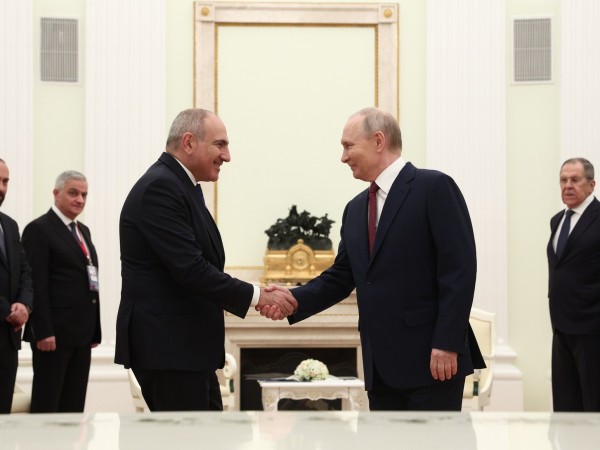
Azerbaijan has long benefited from maintaining pragmatic ties with all regional powers while steadily expanding its strategic autonomy, particularly after the Second Karabakh War. Today, however, that framework is under growing strain as Baku navigates turbulence in its relations with both Russia and Iran, a byproduct of ongoing wars in Ukraine and the Middle East. Currently, Baku expects official apologies from Moscow and Tehran for recent misconduct, seeking to place these relationships on a more equal footing. With Iran, however, this may prove particularly complicated, as the two most plausible scenarios for the country’s future offer little promise of stable ties with Azerbaijan. On the one hand, the current war could consolidate power in Tehran around a tighter circle of hardline figures inclined toward a more assertive posture toward neighboring states. On the other hand, a possible state collapse in Iran could unleash a geopolitical Pandora’s box with profound implications for Azerbaijan’s regional position.