

Topchubashov Center
Expert opinion 2 min read

Afghan peace talks: Second Taliban term in Afghanistan?

Afghan peace talks: Second Taliban term in Afghanistan?
Javidan Ahmadkhanli Expert Published

Listen to this article Read by an AI voice

The United States-brokered Intra-Afghan Peace Talks continue in Doha, the capital of Qatar. For the first time, the talks are being held directly between the Afghan government and the Taliban. The negotiations focus on the structure and polity of the "New Afghanistan" that could be formed after the withdrawal of all U.S. troops from Afghanistan by May 2021. The withdrawal of American soldiers was one of President Donald Trump's 2016 pre-election promises, and the Trump Administration is trying to keep the Afghan process in the spotlight ahead of the November presidential election.

Despite the peace-making efforts, there are serious disagreements between the parties. First, the Taliban demands that the new legal system be in line with Islamic Sharia, whereas the Afghan government defends the existing system. Moreover, one of the key topics is the structure of a possible new transitional government. At present, the Taliban have an upper hand, both politically and militarily; thus, it can be predicted that the Taliban will become a more gainful side at the end of the process. Otherwise, they still have the option to go on with the insurgency. In contrast, The United States does not intend to continue its longest war ever. As the Taliban are trying to earn as much as possible from the talks, a new Taliban era in Afghanistan may not seem far away.

Many are hopeful that the Taliban have learned from the mistakes of the 1996-2001 period and the same mistakes will not be repeated. Several issues such as repressive attitudes towards religious and ethnic minorities and women's rights are among the main concerns. Besides, the Taliban are asked to adopt a more centralized structure and prevent armed groups from networking in Afghanistan. Finding solutions to these issues will have a direct impact on the Taliban`s integration to the international political system and relations with other countries during their probable second term in Afghanistan.

 

Related work

Expert opinion

US foreign policy before midterm election

As the US midterm election is approaching, the correlation between President Trump’s statements and actual US policies, gets more and more uncertain. And while his occasional eccentricities on Twitter or during rallies with supporters, have become part of a po...

Murad Muradov, 27 October 2026

Expert opinion

Connecting Central Asia and the South Caucasus

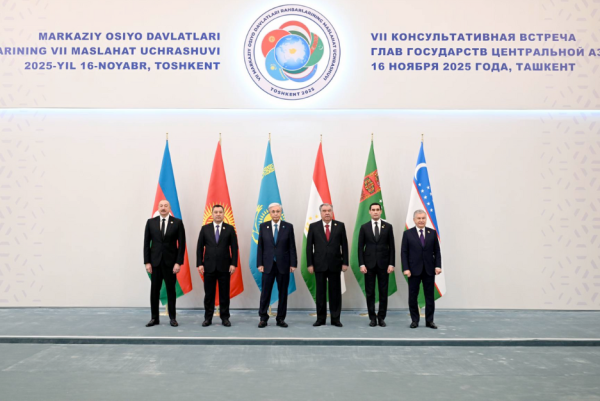
On November 15, Azerbaijan formally joined the Central Asian Consultative Meetings, expanding what was known as the Central Asian Five (C5) into a Central Asian Six (C6). Many in Central Asia find it surprising. But when viewed through the lens of recent geopo...

Gulkhanim Mammadova, 1 December 2025

Expert opinion

Azerbaijan joins the C5: implications for Eurasian regional architecture

When the long-standing C5 format of Central Asian cooperation formally expanded into a C6 on 15 November in Tashkent, Azerbaijan’s accession was framed as a natural extension of historical and linguistic affinities. Yet behind the rhetoric lies a structural tr...

Gulkhanim Mammadova, 21 November 2025

Expert opinion

Kazakhstan joins the Abraham Accords: Pragmatism or Symbolism?

Kazakhstan’s accession to the Abraham Accords—anticipated in some political circles—may still raise eyebrows. Unlike the original signatories, who were establishing relations with Israel from scratch, Kazakhstan has long maintained cordial ties with the Jewish...

Rusif Huseynov, 9 November 2025

Expert opinion

13 June attack: quick comments

In the most extensive attack on Iran since the country’s 1980-88 war with Iraq, Israeli forces have launched multiple waves of nationwide bombings. The attack is ongoing and believed to be the opening shots of a wider campaign to degrade Iran’s military comman...

Murad Muradov, 13 June 2025

Expert opinion

Historic First in Tbilisi: Armenia, Azerbaijan and Georgia trilateral talks

On April 17, Tbilisi hosted the first-ever formal trilateral meeting between the foreign ministries of Armenia, Azerbaijan and Georgia. According to official statements, the primary aim of the meeting was to create a platform for open dialogue and to explore p...

Gulkhanim Mammadova, 17 April 2025

Expert opinion

Munich speech, 18 years later

The Munich speech of the U.S. Vice President J. D. Vance will definitely enter the textbooks of the future as one of the harbingers of a new historic period. This speech has been arguably more shocking than Vladimir Putin’s diatribe he made on the same stage 1...

Murad Muradov, 19 February 2025