


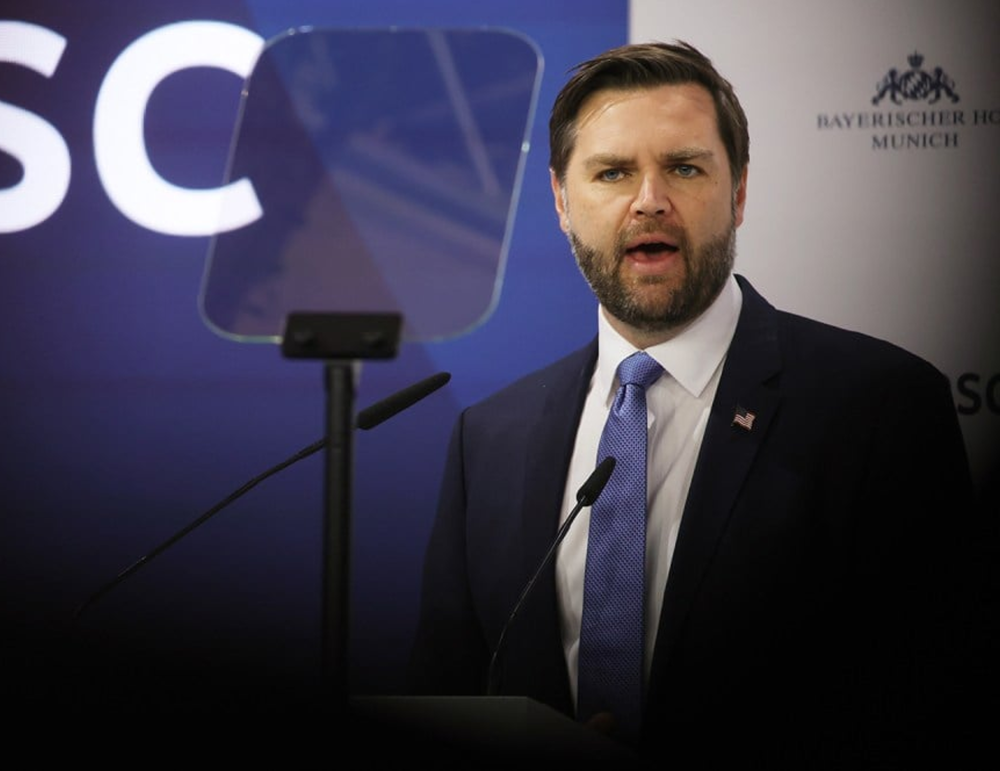

The Munich speech of the U.S. Vice President J. D. Vance will definitely enter the textbooks of the future as one of the harbingers of a new historic period. This speech has been arguably more shocking than Vladimir Putin’s diatribe he made on the same stage 18 years ago, as it basically announced a radically new approach by Washington to its foreign policy which may leave no stones unturned, including the bedrock of the modern world order- the U.S.-Europe alliance. So, how should we interpret this alarming message from D.C.?
The new American approach has emphasized the peculiarity of American hegemony which caused many analysts to see U.S. as an “unusual hegemon” because of its level of preoccupation with domestic affairs in comparison to global politics. This peculiarity often led Washington to projects its internal narratives over the international arena which has not always been the optimal choice from the point of view of power politics. Now, however, we are facing a somewhat different manifestation, where American leadership preaches to not the “Second-” or “Third”-world countries, but to its core European allies. Vance basically startled the Old World elites with an accusation of losing their ways and turning Europe into a new edition of Soviet Union- and explained that to keep a U.S. umbrella open over the continent, Europeans will have to follow Americans in getting back to the roots. By this, he means doing away with the post-modern brand of liberal democracy, political correctness or “minority dictatorship” and returning to a classic, conservative version of democracy, compatible with the values and interests of an “average man” as Vance sees them.
This speech significantly altered the initial expectation from Trump’s administration, based on his first term experience, that it would be extremely cynical and transactional. Instead, we see an ideologically driven government whose approach to foreign affairs is more akin to Bolsheviks than a bunch of business sharks. European reaction has been quite harsh. German Defence Minister Pistorius, speaking soon after Vance, called his accusations “unacceptable” and called out U.S. for their intention to leave Europe out of the Russia-Ukraine negotiations. EU Commissionner for Foreign Affairs, Estonian Kaja Kallas, said that the speech felt like “U.S. was trying to pick fight on us”, while an influential Brussels-based website Politico in its editorial piece characterised the choice Europe is facing now, as either “becoming a U.S. satrap” or “breaking free”, basically accusing Washington of an attempt to kill off European agency once and for all.
What constitutes the gist of new American strategy? First of all, Vance, following in Elon Musk’s footsteps, wants to appeal to common Europeans over the heads of their governments, reinforcing the notion of a “middle class revolt” against the detached and irresponsible elites. U.S. will probably throw its support behind far-right movements across the continent, in the hope that they will get into power and automatically align Brussels (or what remains of it) with the Trumpist Washington. At the same time, the administration is likely very sceptical about European capacity to defend itself and stomach a protracted standoff with the major patron which risks profoundly hurting the already strained economy and multiply security challenges, and believes that after a short-lived revolt European leaders will accept their fate.
However, this “all-in” approach is quite risky (if we assume that Washington is really interested in the continuation of its alliance with Europe). However concerned with migration, ethnic crime and cultural wars European conservatives may be, many of them have been irritated with America’s bossy stance, as the aforementioned piece in Politico also mentions. European right, while sharing positions with their American counterparts on most domestic issues, would rather prefer “making Europe great again” rather than a 51st or even 52nd state of U.S.. In the current global turmoil, radically new geopolitical configurations are possible, and we should not exclude any unexpected combinations involving Beijing and Moscow, or other smaller non-Western powers. Ironically, the Munich speech of J. D. Vance may indeed push Europe to go to the right and “man up”- but with geopolitical consequences not at all favourable to Washington. Decades later, it may be interpreted either as the announcement of European geopolitical death, or as the day when the U.S. global hegemony started to end.