

From military cooperation to Caspian security: The Azerbaijan-Kazakhstan partnership
After the collapse of the Soviet Union, the Caspian region has been far more geopolitically complicated due to a shifting power structure and the appearance of newly independent countries.If before 1991 the Caspian Sea was divided between two powers- Soviet Union and Iran -, since then Kazakhstan, Turkmenistan, Russia as the successor of USSR, and Azerbaijan are also sharing this maritime space.
Discussions regarding the delimitation of territorial waters and coastlines of the Caspian Sea after the emergence of new actors started to be more complex, mainly due to Iran’s dissatisfaction with the proposed agreements. Ultimately, five countries agreed to a complex, but effective compromise: they would consider the seabed to be the sea, and the water column to be a lake. On August 12, 2018, the leaders of five countries gathered in Aktau, Kazakhstan and signed a Convention on the legal status of the Caspian Sea.
This Convention significantly reduced one of the most fundamental reasons for tension in the region by establishing a mutually acceptable framework for the governance of the Caspian Sea. Even though it did not completely become a universal solution to all disagreements, it provided the legal certainty necessary for the development of economic, energy, transport, and security cooperation among the related states. Simultaneously, while problems of maritime delimitation gradually transferred from being the crucial point of discussion in the regional agenda, the era of emerging opportunities and priorities began. One of these opportunities is the fast-scale development of trans-Caspian connectivity projects, particularly the Middle Corridor, which shifted attention toward the protection of critical infrastructure, maritime routes, and logistics networks. In this context, Kazakhstan and Azerbaijan found themselves sharing not only economic interests but also common grounds on security responsibilities, creating solid causes to build up closer bilateral cooperation in the defense sphere. Since sanctions are decreasing capabilities of trade routes of Russia and Iran, and as Europe is looking for alternative logistical routes, the Caspian basin has become an essential link connecting East and West. As it might be seen from this perspective, Astana and Baku are steadily expanding their cooperation in order to guarantee the security of emerging transport corridors and strategic infrastructure amid an increasingly uncertain geopolitical environment. This dynamic is particularly important due to the growing role of two countries in modern geopolitics, since
Kazakhstan and Azerbaijan increasingly view themselves already not only as regional actors but as influential middle powers capable of shaping their own security environment.
Meanwhile, Central Asia is currently becoming more independent in terms of decision-making and economic self-sufficiency, which leads to better coordination of these states in the regional perspective. Simultaneously, Azerbaijan strengthened and verified its position as one of the leading powers of the South Caucasus, making their own, autonomous foreign policy that has gained more power and independence following the Second Karabakh War. These changes and positioning of the two countries within their respective regions, as well as the closer military cooperation between Baku and Astana, appear not only logical but also strategically necessary. Under these circumstances, regional security is appearing to be a central component of the regional agenda.
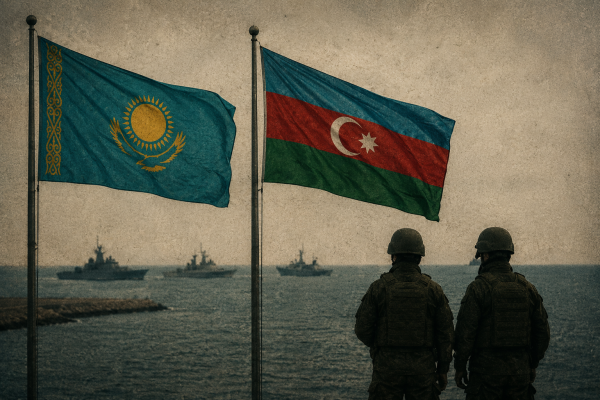
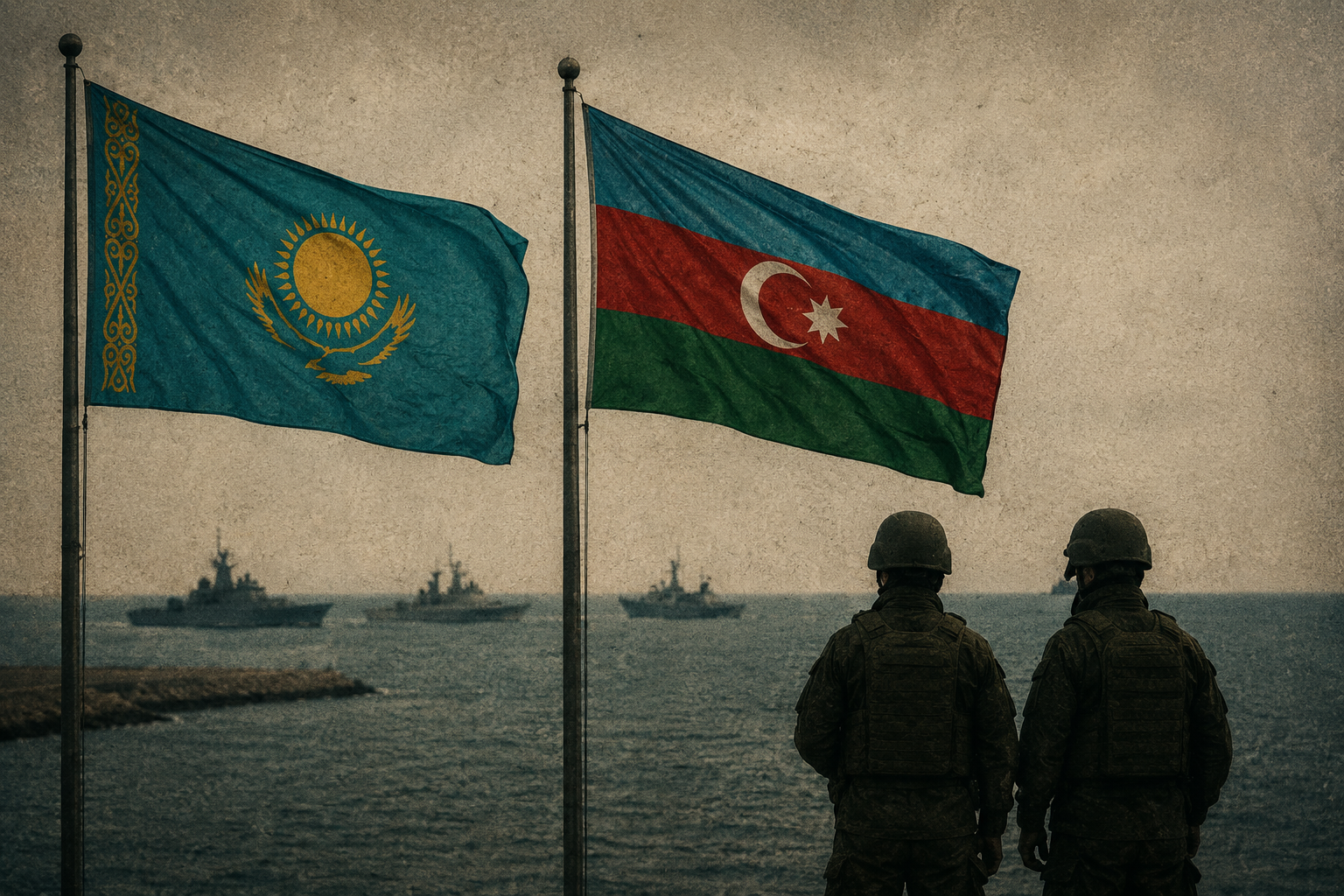
Against this broader strategic backdrop, bilateral defense cooperation has also begun to evolve in new directions. For the first time since the restoration of independence of Kazakhstan and Azerbaijan in 1991, these two states are moving beyond limited interaction focused on personnel training and limited trade relations in the market of military components towards deeper cooperation in production and modernization of the arms, as well as military integration and technological progress alongside with development of industries in this field. This trend has recently received institutional confirmation - on April 29, 2026, Prime Minister of Kazakhstan Olzhas Bektenov signed and approved the draft Agreement on Military-Technical Cooperation with Azerbaijan through Resolution No. 344. The significance of the document lies in Article 2, which substantially expands the scope of bilateral defense relations beyond personnel training and procurement, and includes joint research and development, as well as co-production of military equipment and weapons systems with joint testing of advanced military technologies. This agreement is concluded with an option of five-year period with automatic extension and it demonstrates that cooperation between Astana and Baku is becoming increasingly institutionalized and aimed at long-term plans.
Another factor driving closer cooperation is the complementary nature of the two countries' defense industries. Many analysts identify the Russia-Ukraine war as the event that transformed military thinking. However, the Second Karabakh War had already demonstrated several of the trends that now define modern warfare. Today, Azerbaijani defense enterprises export ammunition and military equipment to more than twenty countries, which demonstrates the competitiveness of the country's growing defense-industrial sector. Kazakhstan contributes a different but equally important set of capabilities. The country possesses a substantial industrial base inherited from the Soviet era, acquiring heavy engineering infrastructure alongside technical equipment like armored transport and modernization plants. Azerbaijan brings combat-tested experience in unmanned and modern electronic warfare systems. Kazakhstan contributes its industrial capacity with precise military potential, which might be seen by the developed armored vehicle modernization facilities and such cooperation would not only reduce dependence on imports from external actors but could also position both states as competitive defense manufacturers on international markets. Partnership in production of military techniques with integrated supply chains and coordinated export strategies would allow both countries to reform defense cooperation into a new path of economic growth and technological modernization.
This shift shows the growing ambition of both countries to coordinatively improve their independent defense capabilities and contribute to a more autonomous security architecture in the Caspian region. Even though Russia and Iran remain crucial players in the regional security environment, the development of bilateral military-technical cooperation demands deeper coordination by Azerbaijan and Kazakhstan to diversify their strategic partnerships and gradually reduce their dependence on traditional centers of influence, meanwhile increasing their strategic autonomy and a space for maneuvers in regional affairs.
Beyond joint military exercises, however, the long-term significance of this partnership lies in the institutional framework it might build up. The already mentioned joint production and coordinated work on protecting the strategic infrastructure could eventually become more productive than exercises such as Birlestik-2025, a military exercise between special forces of Kazakhstan and Azerbaijan. These military drills are important demonstrations of political will. However, defense-industrial cooperation creates a more durable fundamental platform, which will result in institutional relationships and long-term strategic interdependence. Following all these factors, it becomes clear that the protection of the Middle Corridor’s route will increasingly require precisely these forms of cooperation. In this regard, Azerbaijan and Kazakhstan are gradually becoming not only security consumers but also security providers within the Caspian basin.
Going back to the political aspects of this discussion, it is possible that observers might start to wonder whether this cooperation between two Turkic countries on different sides of the Caspian sea can be viewed as one step towards the transformation of Organization of Turkic States to a new dimension, which might end up as a military bloc. From one perspective, a successful Azerbaijani-Kazakh defense partnership could inject new momentum into the Organization of Turkic States, encouraging it to move beyond its predominantly political, cultural, and economic agenda toward more ambitious forms of security cooperation and institutionalization. However, this does not necessarily imply the creation of a military alliance. Rather, it points toward deeper bilateral relationships and still will be widely viewed as primarily the pragmatic union without an ideological framework, but it does not eliminate the possibility that, if current trends continue,
cooperation between Baku and Astana could eventually become one of the principal drivers of a broader Turkic security dialogue.
At the same time, the perspectives of deepening military relationships should not be overestimated, since significant structural differences continue to shape the strategic priorities of both countries. As Kazakhstani military security expert Emin Jabbarov notes, Kazakhstan has traditionally been relying on its multivector foreign policy, preferring diplomacy and interconnectivity to military power, prioritizing social development and investments in a human capital over the construction of strong military institutions. According to Mr. Jabbarov, the events of Qantar 2022- series of civil unrests in Kazakhstan that started after increased prices for the liquefied petroleum, demonstrated that "Kazakhstan was not prepared for civil conflicts", highlighting the need to strengthen its own military doctrine and institutional foundations before planning more ambitious defense initiatives. He also argues that the strategic significance of the Caspian is viewed completely differently by the two states: while it represents a crucial geopolitical space for Azerbaijan, whose political and economic center - Baku- is located on its coastline, it constitutes only the Western part of Kazakhstan's broader strategic landscape. Jabbarov further emphasizes that security cooperation should be understood within different regional contexts. As he explains,
"Central Asia is way different from South Caucasus: relationships between Central Asian countries, despite the conflicts, are way more tight and have more similarities than differences and large interdependence, while in South Caucasus dialogue is more complicated due to fundamental differences and a long history of conflicts between each other".
Consequently, Kazakhstan's multivector approach lies primarily directed toward preserving regional balance in Central Asia, but not to the promotion a broader Turkic security identity, since increasing emphasis on such a narrative could complicate relations with non-Turkic members of the region, while undermining the existing Central Asian regional identity. In this framework, joint military exercises between Baku and Astana must primarily be viewed as confidence-building mechanisms with avoidance to label them as preparations for integrated military operations. As an expert observes, even though "military and combatary training between two countries are happening, which is a positive signal, these activities have more of a value of building up trustworthiness and friendship rather than practical military value", especially given the fundamentally different geographical and operational environments of Central Asia and the South Caucasus. Therefore, greater emphasis on diplomatic engagement with increasing cultural exchanges, resulting in better political and societal interconnectivity, are more convenient and equally important for strengthening the long-term strategic partnership between Astana and Baku.
Taken together, both the opportunities outlined throughout this article and the practical constraints highlighted by Mr. Jabbarov suggest that military-technical cooperation between these two countries is no longer just a bilateral initiative. It is gradually becoming a formation of a new joint force in a Caspian security architecture, which is based on shared responsibility for regional stability. Of course, the long-term implications could extend well beyond military affairs, and might begin as cooperation aimed to protect transport corridors and simply strengthening national defense capabilities, but later on it may have a perspective to become a broader framework of Turkic connectivity