

The Good, the Bad, and the Ugly: Serbian energy crisis amid US sanctions, Russia’s ouster, and Hungarian rescue
On 9 October 2025, US Department of the Treasury (OFAC) has imposed secondary sanctions which target Russian oil and gas sectors and extend their pressure on NIS (Naftna Industrija Srbije), the main Serbian energy company, because of the majority share owned by the Russian Gazprom Neft (44.85 per cent) and JSC Intelligence (11.3 per cent). NIS controls the largest oil refinery of the country, located in Pančevo, which supplies roughly 80% of domestic demand, and employs about 13,500 people operating in more than 400 fuel stations across Serbia, as well as around 80 in Bosnia, Bulgaria and Romania. NIS contributes to 11.9% of Serbian state budget, and its production and operations account for 6.9% of GDP.
US representatives in Belgrade, emphasized that the measures are not aimed at Serbia but at Russian entities that use oil revenues to finance the invasion of Ukraine.
Russian Foreign Minister Sergey Lavrov criticized Washington’s actions and dismissed the possibility of nationalizing the company’s shares. The tone and substance of his remarks demonstrate Russia’s determination to increase the costs for Serbia of severing business ties with its entities.
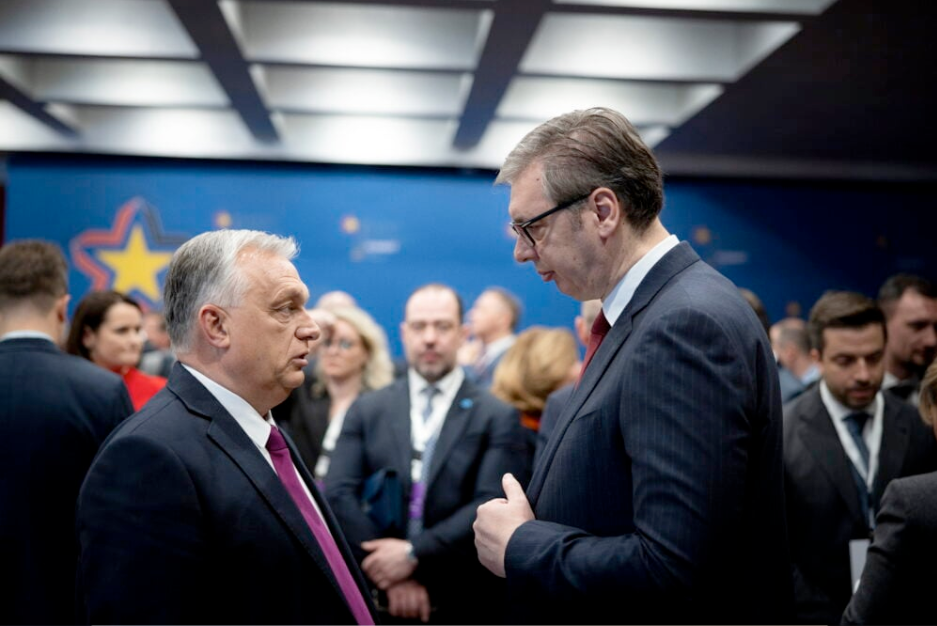
However, the oil refinery is not the sole asset at risk. Due to sanctions, Croatia has halted supplies to Serbia through JANAF pipeline which provides the majority (80–90%) of the crude oil for NIS refinery, despite a contract to deliver 10 million tons of crude over three years, valid until the end of 2026. According to President Vučić, Serbia has vast reserves, yet he also stated that he sees no alternatives but to buy oil from Russia. Therefore, the dilemma faced by Serbian authorities now regards what to do with NIS and how to diversify oil and gas internal demand. If the most obvious answer seems to lead to the sale of Gazprom Neft and JSC Intelligence assets, the recent meeting between US President Donald Trump and Hungarian PM Viktor Orbán at the White House may offer a different way out.
International Monetary Fund figures show Hungary bought 74 percent of its gas and 86 percent of its oil from Russia in 2024, warning that an EU-wide cutoff of Russian natural gas alone could cost Hungary more than 4 percent of its GDP.
Through the meeting in Washington, Orbán secured for Hungary the exemption from sanctions affecting Russian deliveries of gas from the TurkStream pipeline, and oil from the Druzhba pipeline. This tells us that with regards to sanctions against Russia, US policy has become more flexible under Trump, especially towards those leaders enjoying a friendly reputation in MAGA circles. However, as part of the deal, Orbán had to agree on a contract worth roughly 600 million USD to buy LNG from Washington.
After the meeting, Orbán told Hungarian media that Budapest had “been granted a complete exemption from sanctions, but a White House official later told the Reuters news agency that Hungary had been granted only a one-year exemption from sanctions connected to using Russian energy.
To fill in the dots
Serbia-US relations are improving under Trump presidency, as a result of the intensive lobbying activity of the Serbian Government, proved by contracts with five lobbying companies worth more than 5.5 million USD signed since 2019. This resulted in:
- • Ensuring waivers on sanctions on critical Russian assets in Serbia, previously announced by Biden administration.
- • Individual sanctions lifted to Milorad Dodik – the most influential Serb politician of Bosnia and Herzegovina and a central figure for the Serbian diaspora in the Balkans – and his associates.
- • A joint project for a 500 million USD hotel complex in Belgrade, agreed with Jared Kushner’s real estate firm, to be built on the ruins of the generalštab, the former headquarters of the YNA bombed by NATO during 1999 Kosovo campaign.
- • Neutrality in front of ongoing anti-government protests.
At the same time, Belgrade enjoys positive relations even with Budapest. On these basis, President Vučić and Prime Minister Orbán are planning an extension of the Druzhba pipeline which should link Hungary to Serbia minimizing the risk of sanctions. The project has already been discussed by the two leaders in the past. The new plan outlines the construction of an 180km oil pipeline to be finalized in the next three years, with an estimate cost of 320 million euros, where Serbia is expected to build two-thirds of the strategic infrastructure. Furthermore, the importance of Hungary in relations with Serbia lies in the potential role as mediator with Washington, although concessions were already made to Budapest and there are no guarantees that sanctions exemption to Hungary will translate into a preferential treatment to Serbia.
Sanctions’ Disruptive Effects on Serbian Energy Sector
Meanwhile, on November 25, Pančevo oil refinery, hit by sanctions, has ceased production and operations had scaled back to "warm circulation" – meaning that only a certain amount of crude is circulated through the system to maintain the plant’s functionality. An immediate fuel shortage is not expected, though. However, if reserves run out, not only will queues form at petrol stations, but fuel price hikes will be inevitable. Dušan Bajatović, director of Srbijagas, has reassured the public on state television that fuel stocks in Serbia are "sufficient for six to eight months" and that there is "no threat of a price shock or fuel shortage." However, 5,000 employees working at NIS are at risk of dismissal, as the company faces the shutdown of its main asset. To this regard, "I hope the company will not lay off a large number of employees," Vučić said. At the same time, petrol stations will continue operating, yet consumers will be affected by sanctions too, since payments by card are no longer possible – except for Dina Cards.
If banks stop cooperating with NIS, it "will not affect employees' and consumers' personal accounts", said the company's CEO, Kiril Tyurgyenev.
Possible scenarios
While negotiates on the Ukrainian conflict – of which sanctions will be a central point – have been revived, the government has indicated that several potential solutions are feasible, including transferring shares to other private entities, repurchasing them by the Serbian government, or the compulsory renationalization of the company. Serbia’s Energy Minister Dubravka Djedović Handanović on November 19 has announced that Russian owners of NIS have agreed to sell their 56.15% stake and are in talks with a potential buyer, as Belgrade races to meet US demands for a full Russian exit from the company. Serbia has one week to present a restructuring plan after Washington made clear that sanctions imposed on NIS will remain in place until Russian ownership is fully removed. Against this backdrop, a series of high-impact scenarios now looms over Serbia’s energy future.
Scenario 1 – Sale to Hungarian MOL. In the last weeks, the possibility has emerged that the company will be taken over by the Hungarian-owned MOL, which is not affected by the sanctions and already operates 65 petrol stations in Serbia. MOL group already in February had announced that it is ready to take over NIS's role in the Serbian market. A sale to a credible European buyer such as Hungary’s MOL would be the cleanest outcome, officials say, satisfying US demands while avoiding fiscal strain for Serbia. MOL has signaled interest, and Hungary maintains good relations with both Washington and Moscow, making the company a plausible candidate.
Scenario 2 – Sale to other energy giants. MOL group is not the only interested actor in case of Russian divestment. Serbian media have reported that Azerbaijan’s SOCAR – which already supply Serbia with 400mcm of gas per year – and the UK-based Shell have expressed their interest in acquiring NIS. However, such a solution seems unlikely, as Russia might resist the sale of its assets to competitors from countries whose relations with Moscow are reputed complicated if not hostile.
Scenario 3 – Energy integration with Hungary. Another alternative scenario sees Serbia deepening energy integration with Hungary through the construction of cross-border infrastructures, such as the abovementioned project of a pipeline which is supposed to link Serbia to the Druzhba pipeline. Such a project would contribute Serbian energy diversification, by reducing the risk of sanctions and avoiding over-reliance on JANAF pipeline, controlled by Croatia – whose relations with Serbia are historically tense. However, the construction of a new pipeline would require investments and political leverage from Hungary. Still, Serbo-Hungarian energy integration supports long-term regional energy security and may enhance bargaining power with the US. However, the plan to link Serbian pipeline network to the Hungarian hub, located in Százhalombatta, is not supposed to solve short-term complications and it may still expose Serbia to US sanctions. Nevertheless, it should be noted that this solution is not mutually exclusive to that of Scenario 1.
Scenario 4 – Repurchase of shares by the Serbian government. According to this unlikely option, Serbin authorities must negotiate with Russian stakeholders to buy their stake for compensation. This option would consequently turn NIS into a (majority) state-owned company but avoiding controversies over expropriation – which may antagonize Moscow. However, transfer of shares to partial state ownership also means transfer of part of the company’s obligations and debts, which could be unsustainable for the country.
Scenario 5 Nationalization – Full-fledged state-ownership. The state would reassert its control over a critical national asset such as energy security, ensuring energy sovereignty. However, nationalization represents the most unlikely solution, opposed by the government of Aleksandar Vučić who wants to avoid provoking domestic opposition from minority stakeholders, and to create tensions with Russia. In addition to that, nationalization may expose financial risks: taking over a large energy company requires a huge investment by the state, which would also carry the costs for compesating existing shareholders, maintain investments and for the burden of debt caused by recent sanctions-linked losses, that might have disruptive effects on Serbian economy.
Conclusions
US sanctions caught Serbia unprepared – despite a nine-month waiver – and exposed its structural energy vulnerabilities. In a context of uncertainty over Serbia’s future energy disengagement from Russia, Hungary may take advantage of its balanced foreign policy between Moscow and Washington, to carve out a pivotal role in the energy security of Serbia. By enhancing energy integration with Belgrade, Orbán would significantly expand his political influence in the broader Balkan region. It remains to be seen how Hungary intends to co-opt Serbia and come to the rescue of its ally: the purchase by MOL of Serbia’s main national energy company may represent a first step. Meanwhile, Serbia faces a dilemma that will determine the future trajectory of the country. By pursuing the Hungarian path, Serbia will once again opt for continuity within its multi-vector foreign policy while navigating growing political pressures.