

Italy in Beijing: The 2024-2027 Action Plan’s legacy vs Sanchez-Xi understanding
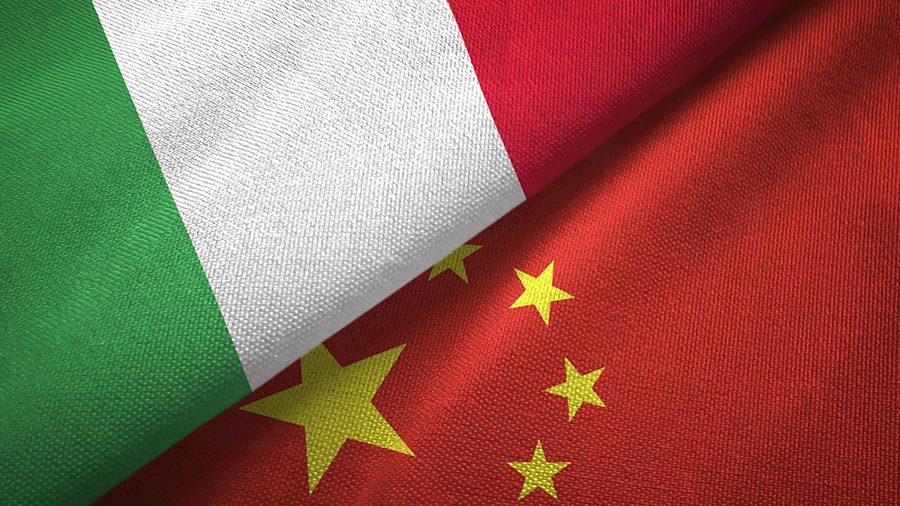
The Italian Minister of Foreign Affairs Antonio Tajani has just concluded his three-day mission in China, where he met with his Chinese counterpart Wang Yi together with the Chinese Minister of Commerce Wang Wentao in Beijing. The diplomatic meeting was part of the continuation of the 2024–2027 Italy–China Three-Year Action Plan, which was signed by the Italian Prime Minister Giorgia Meloni with her Chinese counterpart Li Qiang during her previous visit in July 2024. This project was the result of Italy’s exit from the Belt and Road Initiative (BRI) in December 2023, due to the poor output results and the fear of China being too involved in the Italian domestic economy.
The plan aims to facilitate the entrance of Italian products and investments in the Chinese market, by lowering non-tariff barriers and regulating the flow of investments, in order to mitigate the deficit between the two countries. The main achievement of the visit was the signing of another action plan at the Italy-China Business Committee on Thursday April 16th, joined also by a delegation of 50 enterprises and civil society actors, establishing a common framework for the e-commerce sector of both countries. The agreement facilitated the accession of Italian luxury brands to Chinese digital platforms, granting access to the Eastern Asia Fashion market, where these specific brands were recently facing lowered earnings.
Tajani’s delegation also discussed with Wang Yi the current global situation, calling China to cooperate alongside the international institutions to facilitate the cessations of the hostilities in the Middle East, leading to the re-opening of the Hormuz Strait. Talks related to the conflict in Ukraine and the Chinese capability to dialogue with Russia were also taking place.
Once again, the Italian mission underlines the government’s project of strategic hedging towards different areas of the world and the will of developing its own autonomous approach to global actors and scenarios from the EU but also from the US. Considering the current state of bilateral relations between Rome and Washington, it is understandable that this process might develop at a higher pace than in the past. Indeed, after a few unexpected disagreements between the U.S. President Donald Trump and Meloni, the struggle reached its peak on April 13th regarding Pope Leo XIV’s position over the conflict in Iran. Specifically, the President attacked the Pontiff, who had previously expressed his worries related to the Middle East crisis, and he then directly attacked the Italian Prime Minister, after she cautiously took Pope’s defense. Another effort in this direction seems to be the recent diplomatic mission of Meloni in the States of the Gulf during the Easter holidays, expressing Italy’s will to be directly involved in the Middle East crisis. Still, the Italian position is far from dealignment with the US, due to economic/security dependence and due to a shared ideological view of both Presidents.
However, Tajani’s mission outcomes might fall short, especially if confronted with the achievements of the other almost simultaneous visit of Spain’s Prime Minister Pedro Sanchez with Chinese President Xi Jinping. The bilateral meeting, urged by the need of mutual understanding over the Iranian conflict and the economic shock related to the Strait of Hormuz’s closure, led to the signing of 19 agreements in different fields (10 related to trade issues). Particularly, Sanchez delegation was able to obtain the lowering of barriers against Spanish agro-food products. The same provision is contained in the text of the Action Plan between Italy and China, being essential for Italy’s domestic industry to penetrate the Chinese food’s market (being China the global largest food importer since 2023 with an import value of $140 bn in 2023).
The success of the Spanish delegation might be explained by Spain’s strong position regarding the conflict and its direct denunciation against the American and Israeli initiatives in the Middle East, that were reaffirmed during the bilateral meeting visit also highlighted the mutual will of “taking the good side of history” and to stand with international law. The cautious position Italy has taken since the start of the conflict, despite the recent partial dealignment from the American administration, might have softened the concrete outcome of the mission.
Another possible reason might be the standoff regarding the Pirelli issue. Chinese group Sinochem holds since 2015 the 37% of stocks of Italian Pirelli, global leader of tyre production and its role has been limited by the Italian government after American pressure. The concern revolved around a particular technology called Cyber Tyre implemented in Pirelli’s tyres, that was labelled as “sensitive” and “at risk of being manipulated” by the Chinese government, due to its ability in tracking and managing data from the drive. Considering the fear of Pirelli’s products of being excluded from the American market, the Italian government enabled de-facto the Sinochem role as major holder of the company by adopting the Golden Power security provision, meaning executive extraordinary power to manipulate private business’s disposals in some specific issues areas. The result was a legal complaint from the Chinese group and critics from Beijing. Even if this specific case is not enough to explain the low pace of the economic process undergoing between the two countries, it shows a common distrust in investment and technology’s share phases of the plan.
It’s also important to highlight that the Action Plan’s major goals, such as the already mentioned food trade cooperation, are still to be achieved. Considering that the agreement will last until 2027, both time and manoeuvre space for both countries are highly constrictive. In 2027, the general elections will take place in Italy and the result could redefine the future of cooperation with Beijing. In case of a reconfirmation of Meloni’s executive, it will be probable that the same current direction would be followed, but since the government is facing the highest level of domestic dissensus since taking office in 2022, the result may vary, resulting in a different approach towards China.
The Pirelli issue seems to suggest as well that Italian foreign policy’s potential is heavily limited by the government’s will to maintain strong connections with the US. Italy’s economy remains deeply involved in commercial relations with the US,with Washington being the main destination for Italian exported goods, estimated for a value of $70 bn in 2025, but also the Italian defense strictly relies on American weaponry systems (valued around % $155 million in 2024, 20% of the total Italian weapons imports) and on the common cooperative NATO framework, with around 120 American bases located in the Italian territory. In a global contest where the White House is distancing itself from the other western allies to pursue its domestic interest, a firm hedging-oriented strategy might be more appropriate. The recent autonomous turn of Meloni’s executive international approach, especially in the Middle East, suggests that this type of direction has been started, but further developments must take place. The benefits of such foreign policy have been largely demonstrated by Sanchez’s administration. Strong self-positioning, regardless of historical alliances and of ability to directly impact global events, can be rewarded with favourable deals and crucial opportunities for increasing a country's national prestige.