

Between a brother and an ally: Azerbaijan’s delicate balancing act with Türkiye and Israel
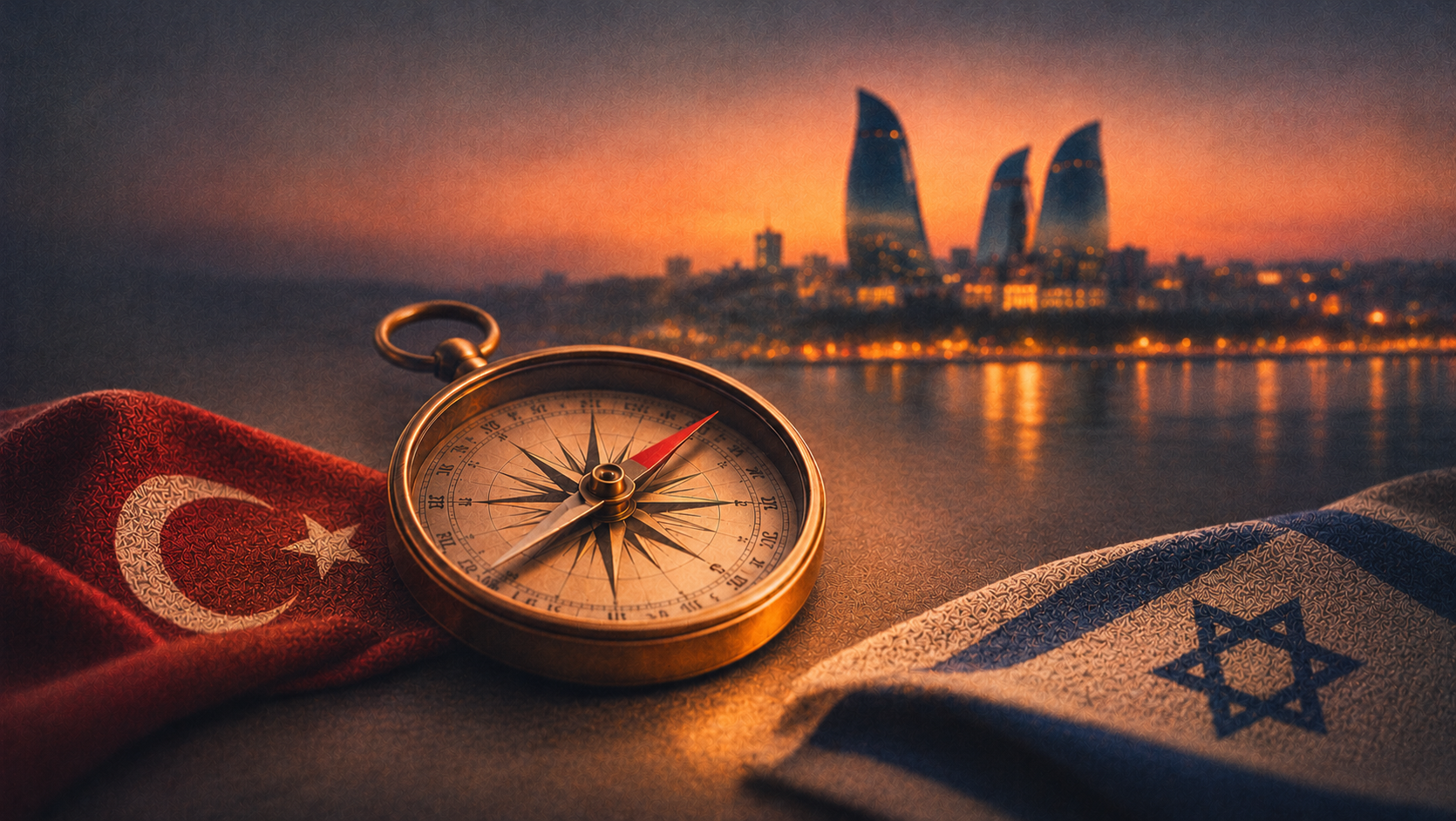
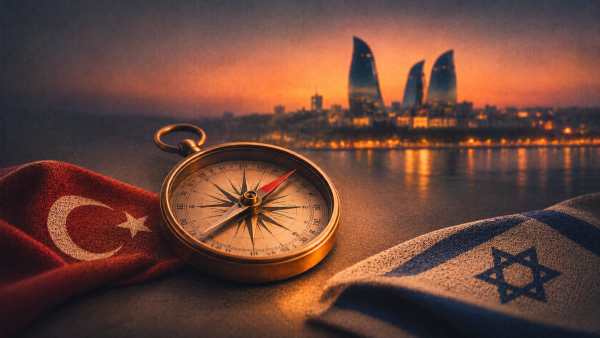
Azerbaijan’s closest partnerships have recently faced an unusually public test, but the speed with which Baku and Ankara reaffirmed their alliance underscores its resilience. Türkiye remains Azerbaijan’s indispensable regional ally, bound to it by identity, energy infrastructure and defence commitments. Israel supplies important military capabilities and sustains a partnership Baku has cultivated since independence. Divergent positions over Gaza and Azerbaijan’s school headscarf restrictions generated diplomatic friction in October 2026. Yet subsequent presidential encounters suggest a contained disagreement rather than an enduring realignment. The challenge for Baku is to preserve autonomy within a close alliance while keeping its relationship with Israel from becoming a recurring source of controversy.
Two diplomatic scenes have exposed the divide. At the UN General Assembly on 24 September 2026, Azerbaijan remained represented during Benjamin Netanyahu’s address while Türkiye joined the protest. Anadolu reported that delegations from nearly 70 countries either left or kept their seats vacant. On 15 October, Turkish Foreign Minister Hakan Fidan and several other delegations left the hall as Israeli President Isaac Herzog addressed the seventh CICA summit in Baku. Accounts differ on the number of departing delegations, but Türkiye’s participation is clear (Anadolu 2026a; Anadolu 2026b).
The second episode brought the disagreement directly into Azerbaijan’s diplomatic showcase. As CICA chair, Baku sought to convene states with competing interests. Ankara used the same platform to signal that inviting Israel did not imply accepting its conduct. Neither gesture necessarily targeted the host, yet their juxtaposition made Azerbaijan’s predicament visible: maintaining access to Israel now carries a growing reputational cost among other partners.
A brotherhood built before the battlefield
The Turkish relationship long predates the 2020 war. Türkiye was the first country to recognise Azerbaijan’s restored independence, on 9 November 1991; diplomatic relations followed in January 1992. The language of “one nation, two states” gave this partnership an exceptional emotional foundation, but its durability also rests on concrete interests. Baku gained a route towards international markets and a powerful regional supporter; Ankara gained a close partner in the South Caucasus (MFA Türkiye n.d.).
Energy infrastructure made that alignment material. The Baku–Tbilisi–Ceyhan pipeline began carrying Caspian oil to the Turkish Mediterranean coast in 2006. Gas cooperation, including TANAP, further connected Azerbaijan’s export strategy to Türkiye’s transit ambitions. These networks also complicate any simple division between a Turkish and an Israeli option: the Turkish export corridor is part of the commercial geography through which Azerbaijani oil reaches international buyers (SOCAR Midstream n.d.; TANAP 2015).
Turkish training, military cooperation and UAV purchases contributed substantially to Azerbaijan’s success against Armenian forces in 2020. The subsequent Şuşa Declaration was signed on 15 June 2021. It elevated the relationship to an alliance and provided for consultations and assistance in the event of threats or aggression. It also built on earlier agreements, notably the 2010 Strategic Partnership and Mutual Assistance Agreement. The alliance therefore institutionalised an existing relationship rather than creating one after the war (Presidency of Azerbaijan 2021).
An Israeli partnership with its own foundations
Israel was another country to have recognised Azerbaijani independence early, on 25 December 1991, with diplomatic relations established in April 1992. The relationship developed its own logic: Azerbaijan offered energy supplies and a strategically important partnership in the Caucasus, while Israel provided defence technology and wider economic cooperation. Both countries’ proximity to Iran adds strategic significance, although it doesn’t justify treating Azerbaijan as an automatic platform for Israeli action (Heydar Aliyev Heritage 2010).
In December 2016, Ilham Aliyev publicly put Azerbaijan’s defence procurement contracts with Israeli companies at close to $5 billion. SIPRI subsequently estimated that Israel supplied 69% of Azerbaijan’s imports of major arms in 2016–20. That figure measures the volume of major arms transfers, not Israel’s share of every category of military expenditure. Israeli equipment, alongside Turkish assistance, helped strengthen the capabilities Baku brought to the 2020 war. For Azerbaijan, the two relationships were complementary investments into security (Presidency of Azerbaijan 2016; SIPRI 2021).
Energy cooperation is likewise deeper than a simple barter of fuel for weapons. Azerbaijan supplies Israel with crude oil. The partnership expanded further with SOCAR’s January 2025 agreement to acquire a 10 per cent effective stake in Israel’s offshore Tamar gas field. The agreement concerns investment in Israel’s energy sector rather than Azerbaijani gas exports to Israel (Presidency of Azerbaijan 2016; SOCAR Germany 2025).
The relationship also has a social foundation. Azerbaijan’s longstanding Jewish community and connections with Jews of Azerbaijani origin in Israel provide human ties beyond defence transactions. Baku presents Jewish communal life as evidence of its model of religious coexistence. This gives the partnership a domestic narrative as well as a strategic rationale, although communal ties shouldn’t be confused with unanimous public support for the Israeli government’s policies (Presidency of Azerbaijan 2016).
Fault lines emerging
Ankara’s sharp criticism of Israel has turned diplomatic symbolism into a test of political solidarity. Baku has favoured continued engagement, but it hasn’t been entirely silent on Palestinian suffering. In June 2024, Foreign Minister Jeyhun Bayramov urged a ceasefire in Gaza and protection of civilians in a call with his Israeli counterpart. Azerbaijan also supports a Palestinian state and the two-state solution. The divergence concerns the intensity and instruments of pressure on Israel, as well as the costs each government is willing to bear (APA 2024; WAFA 2023).
The controversy over school headscarves introduces a distinct source of tension. Azerbaijan is a Muslim-majority country whose state institutions are explicitly secular. Recent school dress code rules have restricted headscarves in public education; reporting also describes restrictions affecting female teachers. The restrictions apply to education rather than constituting a general prohibition on headscarves throughout Azerbaijan. Baku defends its approach by invoking uniform requirements and the principle of secular education, while opponents argue that excluding pupils or teachers infringes religious freedom and access to education. The state’s justification doesn’t resolve that rights dispute (Reuters 2026; Eurasianet 2026; Trend 2026).
Criticism from Türkiye had moved beyond social media commentaries. Erdoğan’s adviser Oktay Saral and AKP lawmakers challenged the restrictions, prompting an unusually forceful response from Azerbaijan’s governing Yeni Azerbaijan Party on 13 October. The party defended secularism and warned that shared national identity didn’t authorise interference in a sovereign state’s domestic affairs. Its statement also rejected criticism of Azerbaijani–Israeli relations, explicitly bringing the two controversies into the same political argument (Reuters 2026; Eurasianet 2026; Trend 2026).
That linkage matters, but it doesn’t establish that Israel caused the school policy or directed it. The disputes have different origins. Gaza concerns foreign policy and the treatment of a strategic partner; headscarves concern the Azerbaijani state’s regulation of religion and education. They reinforce each other because Turkish criticism can be interpreted in Baku as an attempt to prescribe both its external alignments and its domestic political identity. Conversely, a sharp Azerbaijani rebuttal risks turning criticism by particular Turkish officials into a broader public quarrel between allies.
The deeper disagreement is over the mutual expectations and requirements stemming out of the established brotherhood. For Turkish critics, exceptional closeness creates an expectation of political responsiveness. For Baku, the same formula contains an equally important promise of separate statehood. Azerbaijan’s insistence on independence is therefore part of the alliance’s internal negotiation. It is also a warning that cultural affinity can’t substitute for consent on specific policies.
This is why the language used by officials matters. A criticism framed as a defence of religious rights can be heard in Baku as a challenge to the state's constitutional identity, while a response framed as sovereignty can sound in Ankara like a rejection of a privileged relationship. Neither reading fully captures the other's position. The controversy becomes more combustible when questions about schools are folded into arguments about Gaza and Israel: distinct disputes then acquire a common vocabulary of loyalty, independence and political obligation. Yet this rhetorical convergence should not be mistaken for a unified strategic crisis. The underlying disagreements can be managed through different channels, and neither necessarily requires a revision of the alliance itself.
From strain to rupture
However, even at the height of the dispute the structural factors binding the two countries, were clearly pushing their governments to contain their disputes. Türkiye’s security role, geographic position and economic connections can’t readily be replaced by Israel; nor could Baku discard its Israeli defence and energy relationships without cost. The events of the late October and early November 2026 offer a practical test of that structural logic. Public criticism and diplomatic signaling were real, but they didn’t translate into a sustained breakdown of presidential contact or cooperation.
On 30 October, Aliyev did not attend the Organization of Turkic States summit in Ankara despite Erdogan’s invitation; Foreign Minister Jeyhun Bayramov represented Azerbaijan instead. Azerbaijani reporting cited prior commitments, while the absence was widely read against the backdrop of the headscarf dispute and disagreements over Israel. It was a conspicuous diplomatic signal, but the motive shouldn’t be stated as established fact. The episode also showed the limits of symbolism: Azerbaijan remained represented at the summit, and neither government announced a change in the alliance’s commitments (Reuters 2026). The subsequent sequence was striking. On 8 November, Erdogan visited Shusha for Azerbaijan’s Victory Day commemorations, held bilateral talks with Aliyev and publicly reaffirmed the two countries’ close ties. Aliyev then travelled to Antalya on 10 November at Erdogan’s invitation and attended the COP31 leaders’ summit on 11 November. These visits do not prove that every disagreement was resolved. They do, however, demonstrate how quickly both leaders were prepared to restore a visible sense of political continuity after the Ankara summit controversy (Presidency of Azerbaijan 2026a; Presidency of Azerbaijan 2026b).
The location of Erdogan’s visit mattered as much as its timing. Shusha embodies Azerbaijan’s 2020 military victory and the alliance formalised there in 2021. By appearing together in that setting, the presidents reaffirmed the security and historical foundations of their relationship rather than allowing a dispute over religious policy or Israel to define it. Aliyev’s participation in a major international gathering hosted by Türkiye reinforced that message, although attendance at COP31 shouldn’t be mistaken for a negotiated settlement. The pattern is better understood as managed friction within a durable partnership.
The pace of these encounters also cautions against reading every ceremonial absence as a geopolitical realignment. Summit attendance is a visible signal, but it isn’t a substitute for evidence about decisions taken within defence ministries, energy companies or diplomatic institutions. Conversely, a presidential visit doesn’t prove that all disagreements have disappeared. The more persuasive interpretation is that Ankara and Baku were willing to absorb a short period of public irritation while preserving the high-level contacts through which such irritations are contained. In this sense, the November sequence tests the alliance's capacity to compartmentalise disagreement rather than demonstrating either an imminent rupture or an unconditional harmony (JAM News 2026).
The eastern Mediterranean adds another layer to this balancing act. Türkiye’s long-running disputes with Greece and Cyprus over maritime jurisdiction, security and energy overlap with Israel’s growing cooperation with Athens and Nicosia. On 5 November 2026, Israeli, Greek and Cypriot defence officials reaffirmed trilateral security cooperation and criticised the Türkiye–Libya maritime arrangement. From Ankara’s perspective, such coordination can appear to constrain Turkish influence; for its participants, it is framed in terms of regional security, maritime rights and energy resilience. It would overstate the evidence to describe every element as a unified anti-Turkish alliance. Nevertheless, the emerging alignment means that Baku’s Israeli partnership is increasingly situated within a rivalry extending beyond Gaza and Syria (Israel Ministry of Defence 2026).
For Azerbaijan, the Mediterranean dimension is important principally because it widens the arena in which its two partners may find themselves on opposite sides. Israeli cooperation with Greece and Cyprus doesn’t automatically constitute a coherent anti-Turkish bloc, nor does every joint diplomatic or security initiative target Ankara. Nevertheless, Turkish policymakers may interpret closer coordination among these states against the background of longstanding maritime disputes and deteriorating relations with Israel. Baku therefore has an incentive to avoid language or actions that would make its Israeli partnership appear to endorse a regional containment strategy against Türkiye. At the same time, it has little reason to sacrifice a defence and energy relationship of independent value merely to align with every Turkish position in the eastern Mediterranean. The challenge is to preserve strategic autonomy without allowing that autonomy to be read as strategic opposition.
The value and limits of being a bridge
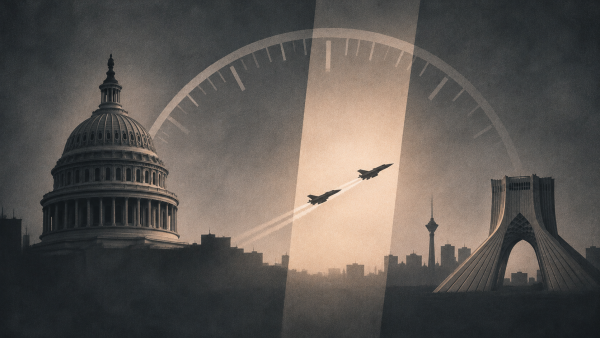
Azerbaijan has already demonstrated that maintaining both relationships can produce a diplomatic service its partners need. On 9 April 2025, Turkish and Israeli officials met in Azerbaijan to discuss arrangements intended to prevent military incidents in Syria. Four days later, Fidan publicly thanked Azerbaijan for hosting the technical discussions and described the importance of avoiding confrontation between aircraft operating in the country. This is a stronger basis for Baku’s balancing policy than a general appeal to friendship: access to both sides can help address an immediate security problem (MFA Türkiye 2025).
The talks also show why the rivalry can’t be explained through Gaza alone. Ankara and Israel have competing security interests in Syria, where the risk of unintended military encounters gives their antagonism an operational dimension. Baku’s usefulness lies in offering a venue acceptable to both. Yet hosting technical talks is not equivalent to reconciling strategic goals. Azerbaijan can facilitate communication; it can’t determine either country’s military choices. Its influence is greatest when both want to manage an incident and weakest when either sees escalation as necessary.
The economic relationship with Türkiye further complicates any account of Azerbaijan as a dependent junior partner. In June 2026, SOCAR Türkiye reported approximately $19.5 billion in investments across its Turkish operations, including refining, petrochemicals and gas infrastructure. These are company-reported cumulative investments, rather than annual trade flows. They create Azerbaijani exposure to Turkish decisions, but also Turkish interests in continuity. Applying pressure to Baku would therefore carry costs for assets and industrial relationships within Türkiye itself. Interdependence restrains coercion without eliminating the possibility of political pressure (SOCAR Türkiye 2026).
Baku also has a more credible Palestinian policy to draw on than the image of an unconditional Israeli ally suggests. Azerbaijan opened its embassy in Israel in March 2023; during the same visit, Bayramov met Palestinian leaders and discussed the establishment of an Azerbaijani representative office in Ramallah. This parallel engagement preceded the Gaza war. It supports the argument that relations with Israel and support for Palestinian statehood need not be mutually exclusive. Its limitation is equally clear: diplomatic recognition and engagement do not by themselves answer demands for stronger action over civilian suffering (The Times of Israel 2023; WAFA 2023). Baku therefore has less room to keep its relationships in separate compartments, but the recent episode also reveals the limits of the resulting tensions. A conference-hall gesture, a school regulation or a missed summit can become a public argument about loyalty. Yet the Shusha and Antalya encounters show that both governments have strong incentives to prevent symbolic disagreements from disrupting strategic cooperation. Azerbaijan can ease pressure through clear support for Palestinian rights, continued contact with Israel and discreet consultation with Ankara. Such measures may manage expectations without eliminating competing interests.
The decisive indicators are practical rather than rhetorical: whether defence cooperation is curtailed, economic projects become conditional, or political disagreement prevents sustained high-level engagement. By 11 November 2026, the evidence pointed instead to a brief but conspicuous diplomatic strain followed by rapid public reaffirmation of the Turkish–Azerbaijani alliance. Baku’s strongest argument remains that its sovereignty and regional usefulness depend on maintaining both partnerships. The task is not to choose between a “brother” and an “ally”, but to keep disagreements with one from undermining the benefits of the other. That balance will remain difficult as Türkiye and Israel compete across several regional theatres, yet the latest events suggest that its immediate limits are political and manageable, not a prelude to rupture.