

Russia’s Changing Air Defense Structure: Assessing the Effectiveness of BARS Mobile Defense Groups
On the night of 13 August 2026, Ukrainian forces conducted a series of drone strikes on several Russian regions. Russian authorities reported a high rate of successful interceptions, but a woman was injured in Rostov and the city of Sevastopol was left completely without electricity after some of the drones reached their targets. While such large-scale and successful strikes against Russian territory would have been unthinkable at the beginning of the war, they have now become a weekly reality to which Russian citizens are increasingly accustomed.
The growing threat of Ukrainian drone attacks since 2024 has led Moscow to adopt measures beyond traditional air defense capabilities. This has resulted in the mass repurposing of voluntary BARS (Combat Army Reserve) units into what Russia calls mobile air defense groups (MDGs). While the existence of gaps in Russia's air defense coverage is clear and has been well documented, the performance of these MDGs remains a much bigger question. As Russian regional governments increasingly rely on these mobile groups, their ability to effectively intercept incoming drones has become increasingly important.
First, it is important to understand that the Combat Army Reserve was not initially established for this purpose. When BARS was established in 2021, it was intended as a voluntary formation designed to increase Russia's defense capabilities. Personnel in BARS were expected to serve in different branches of the armed forces alongside regular troops, and the 2022 invasion of Ukraine turned out to be precisely such a scenario. Many of these units participated in combat on the “special military operation” frontlines, with one of the most prominent and elite formations being "BARS-13", which participated in a number of actions in Ukraine.
As the war progressed, however, Moscow had to address intensifying Ukrainian drone activity over Russian territory. With more than 400 ground-to-air systems lost and the continued adaptation and innovation of Ukrainian UAVs, Russian officials had to look for other, more cost-effective ways of defending the skies over its vast territory. The solution adopted by many Russian regional governments was the establishment of mobile defense groups from existing BARS units.
The requirements for candidates seeking to join BARS MDGs are typical for this type of formation and are not particularly demanding. Citizens up to 62 years old with the required identity documents, at least a secondary school diploma, and adequate health conditions can apply to these voluntary units. Regions such as Orenburg are currently actively recruiting personnel. Each territorial BARS unit consists of 298 soldiers, with each individual MDG squad consisting of four soldiers.
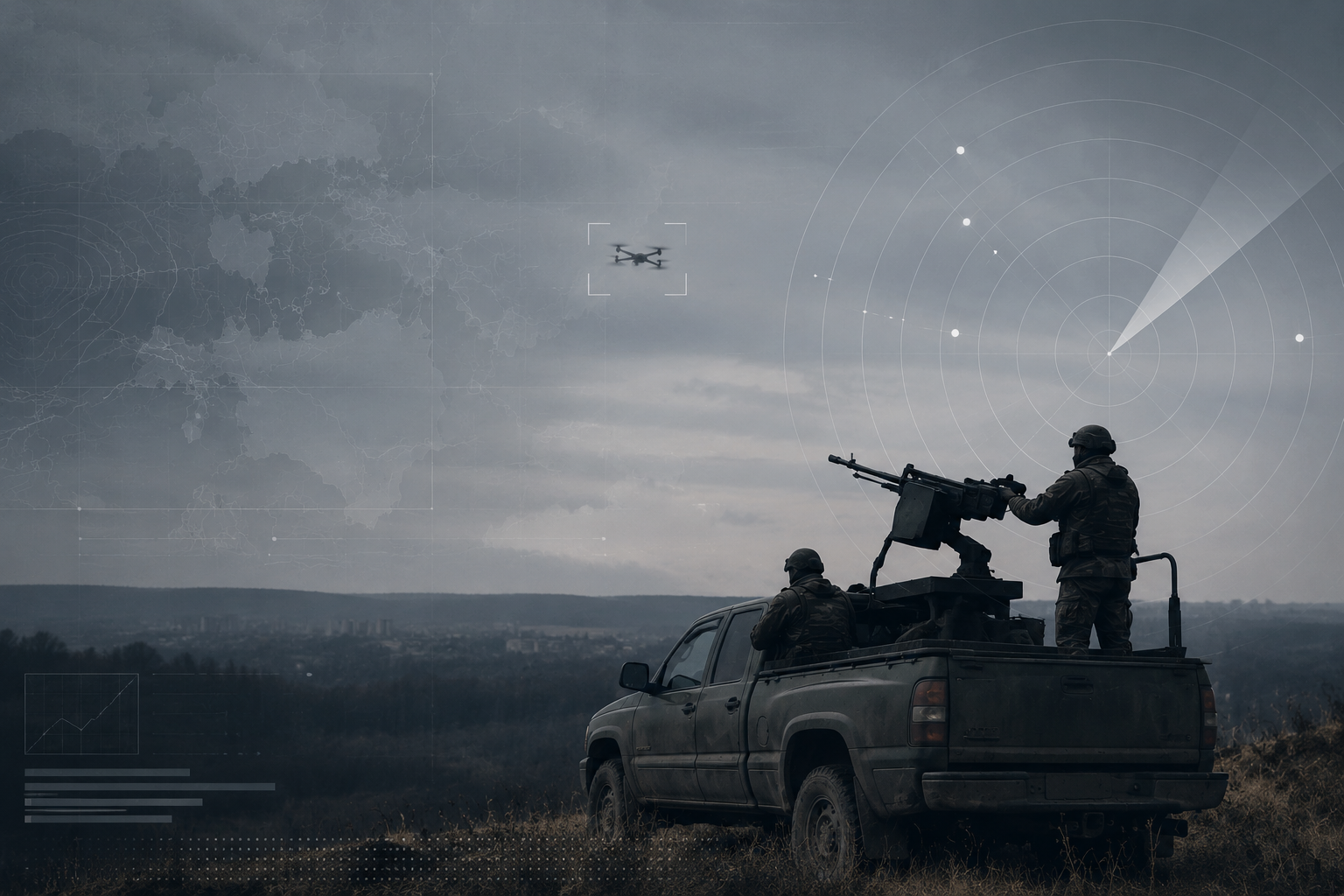
Reports describe BARS units in Chelyabinsk where candidates undergo full medical and tactical training, including shooting practice, at the 90th Tank Division base in Chebarkul. The training is conducted by instructors with combat experience in Ukraine, while recruits are stationed exclusively within their respective regions under contract. The armament of similar units in the Kursk region includes light machine guns, truck-mounted machine guns, interceptor drones, and electronic warfare systems.
Typical payments for reservists participating in the defense of critical infrastructure as part of MDGs range from approximately 200,000 to 500,000 rubles, depending on rank. Additional benefits include insurance, subsidies on medicine, and the retention of employment and salary, among other provisions. Depending on the region, reservists may also receive additional compensation, such as contract-signing bonuses and payments for each enemy drone neutralized.
Despite seemingly favorable training and compensation, the effectiveness of MDGs remains contested. While Russian state media and BARS social media channels frequently praise the work of these formations and claim success in defending against incoming drone attacks, Ukrainian and European media and experts are more skeptical about the effectiveness of these mobile groups.
There is not enough publicly available evidence to substantiate all interception claims, but reports of BARS activity and destroyed drones are regularly shared on the social media channels of individual units. Footage of the interception of an alleged Ukrainian "Shulika" drone by a Russian interceptor drone was shared on the Telegram channel of BARS Kursk. Two more Ukrainian drones were intercepted and showcased on the same Telegram channel a week earlier.
Similarly, footage of a destroyed bomber-type drone was shared by BARS Bryansk operators via the unit's Telegram channel. BARS operators in Sevastopol, which has experienced particularly heavy drone attacks, have also posted footage of several neutralized Ukrainian drones on their Telegram channel.
It is also worth noting that these units are naturally becoming important targets for Ukrainian drones, resulting in regular casualties among some units. The loss of an MDG operator was recently reported by BARS Bryansk on Telegram. These losses are offset by continued recruitment into existing units and the planned establishment of new BARS MDGs in regions such as Kherson.
As mentioned previously, while there is clear evidence that MDGs are performing their duties, many of their claims remain unsupported. This includes a late 2025 claim by BARS Bryansk that MDG operators had eliminated more than 350 enemy drones. The continued successful drone strikes by Ukrainian forces, together with the evidence discussed above, have led some analysts to question the effectiveness of BARS mobile defense groups.
Military observer Ilya Abishev expressed doubts about the suitability of BARS mobile defense groups' equipment for intercepting modern Ukrainian drones, which have adapted significantly over the past two years by increasing their flight altitude to make interception more difficult. Similar concerns were expressed by Ukrainian military expert Igor Romanenko, who argues that the mobile defense group model is generally poorly suited to countering drone threats, while purpose-built interceptor drones are more effective. While Moscow clearly recognizes the need for interceptor drones and is already working to increase their production, many MDGs still have to rely on machine guns as their primary counter-drone capability. It would therefore be reasonable to conclude that many Russian mobile anti-drone units lack the capabilities necessary to defend against mass Ukrainian drone attacks, leaving critical infrastructure across Russia's regions at continued risk.
Still, public discourse surrounding BARS MDGs is largely positive, with many popular military bloggers and state media supporting their expansion and praising their alleged success. Complaints are more often directed at local authorities for failing to provide the formations with sufficient equipment and support. For example, Vladimir Solovyev recently highlighted shortages of machine guns and off-road vehicles among MDGs in Crimea.
However, some pro-war military commentators have gone further in criticizing the organization and equipment of these formations. Rybar has highlighted the problem of BARS personnel being forced to modify or repair their equipment themselves, including through improvised solutions and at their own expense, while also arguing that the MDGs are becoming increasingly insufficient as Ukrainian drones grow in both number and sophistication. The so-called “military correspondent” Kotenok has reported that BARS vehicles are not officially registered with the Ministry of Defense, making it difficult for operators to obtain fuel and forcing them to wait in ordinary fuel queues, which creates additional risks and slows down their operations. He has also described Russia’s broader defense of critical infrastructure and businesses against drone attacks as chaotic and poorly organized. Even under posts praising BARS successes, Russian commenters have questioned why so many Ukrainian drones continue to reach their targets and criticized the equipment provided to MDG personnel.
Russia’s BARS mobile defense groups have demonstrated that they can provide an additional layer of protection against Ukrainian drone attacks, but their current structure and equipment continue to limit their overall effectiveness. The reliance of many MDGs on machine guns, combined with questions surrounding detection capabilities, training, and the reliability of reported interception figures, makes them poorly suited to providing comprehensive protection against increasingly capable and numerous Ukrainian UAVs. The emergence of BARS Moscow, however, suggests that Moscow is already adapting the model. Its heavier reliance on interceptor drones indicates that lessons from the limitations of conventional mobile groups are being incorporated into newer formations. If similar capabilities are introduced across regional BARS units, their effectiveness could improve considerably. This would not eliminate the broader limitations of the MDG model, but a greater reliance on interceptor drones could turn these formations into a more efficient component of Russia’s layered air defense.