

The Contemporary Evolution of the Iran-Afghanistan Relationship
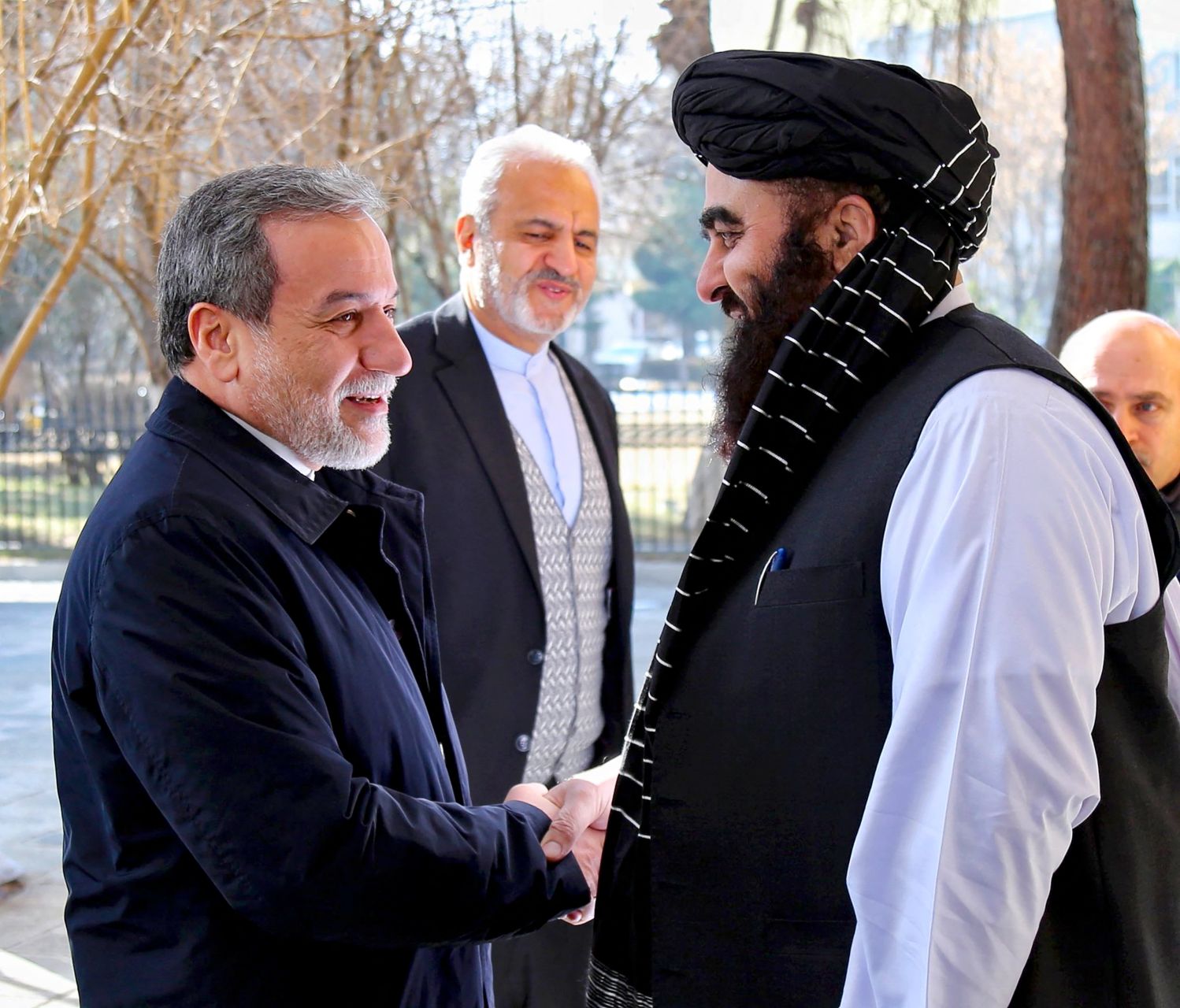
Contemporary Iranian-Afghan relations are characterized by a combination of strategic pragmatism, security competition, and economic interdependence.
Despite persistent tensions over transboundary water resources, refugee flows, border clashes, terrorism, and cross-border criminal activities such as drug and arms trafficking, both states continue to maintain practical cooperation in trade, transit, infrastructure, and regional connectivity.
The relationship is shaped not only by immediate bilateral concerns but also by broader geopolitical calculations involving the United States, Saudi Arabia, Pakistan, India, Russia, and China. For Tehran, Afghanistan represents both a strategic buffer on its eastern frontier and a potential source of instability capable of threatening Iran’s internal and regional security architecture. Although the bilateral relationship between Tehran and Kabul was relatively warm during the period of western security infrastructure presence in Afghanistan, it has over time grown into a relationship of mutual trust degradation which resulted in a massive deportation of Afghans from Iranian territory.
Historically, Afghanistan has occupied a central place in Iranian foreign and security policy since the establishment of the Islamic Republic in 1979. During the 1980s and 1990s, Iran developed relations with numerous Afghan political and armed factions, including Shiite groups and Sunni anti-Taliban movements such as Jamiat-i Islami and Junbesh-i Milli.[1] Following the end of the Iran-Iraq War, Tehran increasingly viewed Afghanistan through the lens of regional balance-of-power politics and strategic depth. After 2005, particularly under the Ahmadinejad administration, the Islamic Revolutionary Guard Corps (IRGC) gradually expanded clandestine contacts with Taliban factions. This cooperation was largely motivated by Iran’s determination to prevent Afghanistan from becoming a platform for American military operations and intelligence activities against Iran. Iranian support reportedly included limited military aid, training, logistical assistance, and medical support, while the IRGC encouraged Taliban factions to prioritize attacks on Western military forces.[2] Tehran also opposed peace arrangements that could institutionalize long-term American military presence in Afghanistan, fearing that the Taliban could eventually become instruments of U.S. influence.[3]
At the same time, Iran’s relationship with the Taliban remained fundamentally pragmatic and unstable rather than ideological or fully strategic. Although the IRGC sought to cultivate influence within selected Taliban factions and leadership circles, the Taliban movement itself remained highly fragmented, tribally diverse, and resistant to foreign domination.
Iranian policymakers recognized that durable control over the Taliban was impossible, which prevented the movement from becoming a formal part of the so-called “Axis of Resistance.” While certain Taliban commanders and networks, including elements linked to the Mashhad Shura and figures such as Mullah Naim and Ibrahim Sadr, maintained long-term ties with Iran, the broader Taliban leadership consistently attempted to preserve strategic autonomy and avoid excessive dependence on Tehran. Consequently, periods of tactical rapprochement between the Taliban and Iran were repeatedly followed by renewed distrust, particularly during negotiations between the Taliban and the United States.
Following the Taliban’s return to power in August 2021, Iran faced the necessity of constructing a new security architecture along its eastern borders. Tehran increasingly feared that Afghanistan could become a sanctuary for extremist organizations hostile to Iran and Shiite communities, including ISKP and anti-Shiite militant groups. As the centre of the Shiite world, Iran continues to pay particular attention to the protection of Afghan Shiite minorities, especially the Hazara population. Over recent decades, Iran invested heavily in educational, healthcare, and social infrastructure projects benefiting Hazaras, thereby strengthening socio-political influence and attempting to counter the spread of Sunni radicalism.[4] However, the empowerment of Hazara networks and organizations simultaneously intensified sectarian tensions within Afghanistan. Iran also remains concerned about the possible deployment or recruitment of Afghan Shiite fighters, particularly members of the Fatemiyoun Brigade, in the context of broader regional confrontations involving Israel and Iran.[5] Nevertheless, the Taliban has consistently rejected foreign military recruitment activities on Afghan territory, framing such actions as violations of Afghan sovereignty.
Security concerns continue to dominate bilateral relations.
Iran perceives any potential return of American military infrastructure, particularly around facilities such as Bagram Air Base, as a direct geopolitical threat to its eastern provinces. Tehran fears that Afghanistan could once again become a platform for drone surveillance, missile deployment, intelligence gathering, and covert operations targeting Iran.
Simultaneously, Iranian officials remain deeply concerned about the persistence of terrorist organizations operating from Afghan territory, including ISKP, Tehrik-i-Taliban Pakistan (TTP), separatist Baluch networks, and other transnational extremist groups. Iran’s reported demands regarding the Taliban dismantle terrorist infrastructure and prevent Afghan territory from being used for recruitment, training, financing, or cross-border militancy obviously coincide with both regional and international player’s objectives.[6] Border insecurity, narcotics trafficking, and occasional clashes between border forces further complicate normalization efforts between the two states.
Migration and humanitarian issues have also emerged as central dimensions of Iran-Afghanistan relations.
Iran remains one of the largest host countries for Afghan refugees and migrant workers despite severe economic pressure caused by sanctions and domestic difficulties. However, Iranian authorities increasingly fear the infiltration of extremist elements under the guise of refugee flows. Since 2024, Tehran has intensified biometric registration programs [7], migrant legalization measures, and border-control mechanisms while simultaneously deporting large numbers of undocumented Afghans.[8] These policies reflect both security concerns and the enormous humanitarian burden placed upon Iranian social infrastructure. The mass return of Afghan migrants has further strained Afghanistan’s fragile economy, infrastructure, and public services, contributing to instability and increasing the likelihood of future migration crises. The massive deportation campaign of Afghans residing in Iran for generations had been intensified following the 12-day air assault of Israel against Tehran. For months, Iranian authority deported a huge number of ethnic Afghans who have been living in Iranian territory for the last several decades.[9] The number of deported Afghans from Iranian territory reached unprecedented levels, with more than 1.9 million Afghans returning or being deported from Iran in 2025 – many involuntarily – and a further 152,100 returns recorded in 2026.[10]
According to some media outlets, the primary reason for Tehran to take such a harsh measures was said to be an alleged collusion [11] between Mossad and Afghan diaspora living in Iran during the Israeli massive bombing campaign against Iran in June, 2025.
Economic interdependence nevertheless remains one of the strongest stabilizing factors in bilateral relations. Afghanistan continues to depend heavily on Iranian imports, including fuel, food products, industrial goods, and construction materials. Iranian transit infrastructure, particularly Chabahar Port, has become strategically important for Afghanistan’s access to international markets, especially as trade routes through Pakistan remain politically unstable.
Tehran also views Afghanistan as a weighty export market capable of partially mitigating the effects of Western sanctions on the Iranian economy.
However, deteriorating regional security conditions and the possibility of military escalation involving Iran threaten these economic ties. Any disruption of Iranian production, transportation networks, or maritime infrastructure could generate severe inflationary pressures and shortages within Afghanistan, which remains heavily dependent on Iranian supply chains. Rising fuel prices, sanctions targeting Iranian trade infrastructure, and instability around transit corridors also increase export and transportation costs for Afghanistan, reducing the competitiveness of Afghan products in regional and global markets.
Beyond bilateral dimensions, Iran-Afghanistan relations are increasingly embedded within the broader regional geopolitical and connectivity projects.
Iran, China, Pakistan, and Russia have all cautiously supported pragmatic engagement with the Taliban government due to shared concerns regarding terrorism, regional stability, and economic integration. Along with a complementarity of the relations between Tehran and Kabul, there is an emerging mistrust among these two neighbours that has slowly been growing due to, a certain extent, the deteriorated security situation in Middle East.
References
1. Antonio Giustozzi, The Resilient Oligopoly: A Political-Economy of Northern Afghanistan 2001 and Onwards (Kabul: Afghanistan Research and Evaluation Unit, December 2012), ECOI PDF
2. Nargis Kassenova, Relations between Afghanistan and Central Asian States after 2014: Incentives, Constraints and Prospects (Stockholm: SIPRI, May 2014), PDF document.
3. Antonio Giustozzi, “How Iran Did Not Take the Taliban into the ‘Axis of Resistance,’” Central Asia Program, December 2, 2025, Central Asia Program.
4. Antonio Giustozzi, “How Iran Did Not Take the Taliban into the ‘Axis of Resistance,’” Central Asia Program, December 2, 2025, Central Asia Program.
5. Ahmad Majidyar, “Iran Recruits and Trains Large Numbers of Afghan and Pakistani Shiites,” Middle East Institute, January 18, 2017
6. International Crisis Group. The Taliban’s Neighbourhood: Regional Diplomacy with Afghanistan. Asia Report No. 337. Brussels: International Crisis Group, January 30, 2024. https://www.crisisgroup.org/asia/south-asia/afghanistan/337-talibans-neighbourhood-regional-diplomacy-afghanistan
7. Biometric Update. “Iran Deploys Biometric System to Control Afghan Migrant Influx.” December 17, 2024. https://www.biometricupdate.com/202412/iran-deploys-biometric-system-to-control-afghan-migrant-influx.
8. “Iran unveils plan to cut Afghan immigrant population by 10% per year.” Iran International, September 5, 2024. https://www.iranintl.com/en/202409049018.
9. Hessam Habibi Doroh. “Between Inclusion and Exclusion: Iran’s Selective Instrumentalization of Afghan Migrants.” Clingendael Institute, March 11, 2025. https://www.clingendael.org/publication/between-inclusion-and-exclusion-irans-selective-instrumentalization-afghan-migrants
10. “Iran-Afghanistan Returns Emergency Response #28: 28–31 March 2026,” ReliefWeb, April 2, 2026, ReliefWeb
11. “Iran drives out 1.5 million Afghans, with some branded spies for Israel.” BBC, August 1, 2025. https://www.bbc.com/news/articles/ckglp8epg11o