

The Gulf's Self-Help Moment
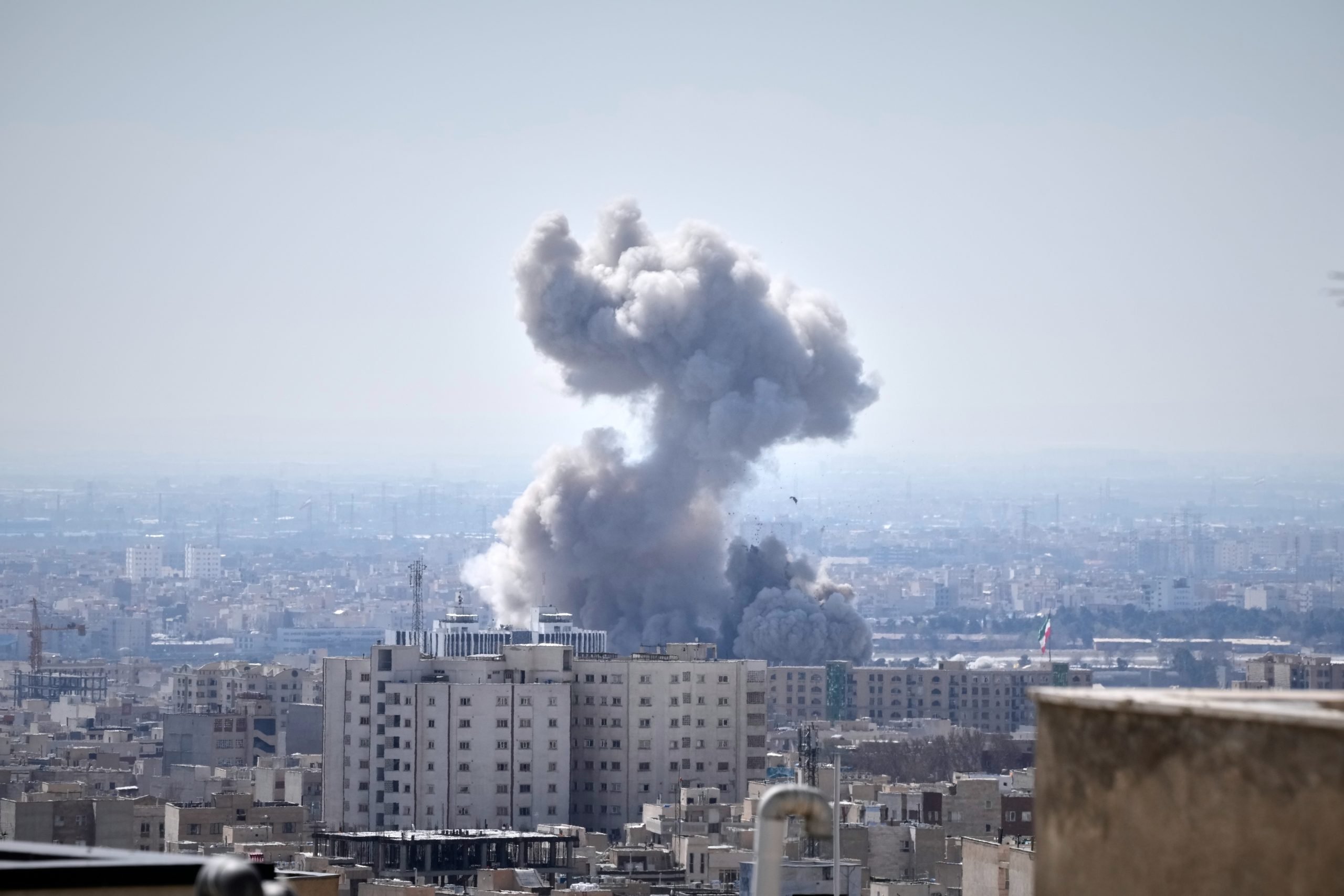
Riyadh has stopped waiting for Washington. So far it has found company rather than cover.
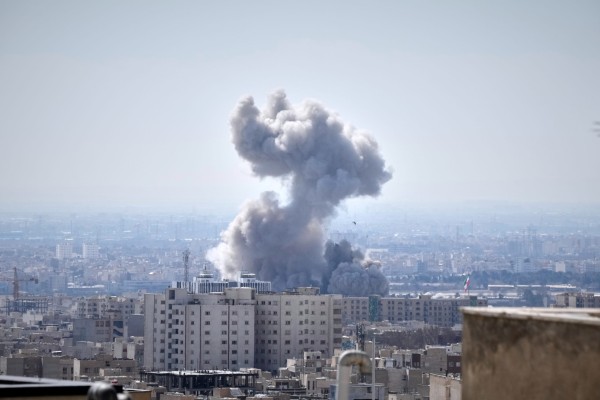
On the night of 10 October 2026, a missile came down on the domestic terminals at King Khalid International Airport in Riyadh. Thirteen people were killed and 308 wounded, most of them passengers and staff near the boarding gates. The dead included Saudis, Bangladeshis, an American, an Egyptian, a Jordanian, a Syrian, a Palestinian and a Sudanese. Saudi officials asked people not to share footage. A CCTV clip from Terminal 3 was circulating within a day anyway.
It was the deadliest attack on the kingdom in more than a decade, and the third on the same airport that week. By 21 October 2026, the Houthi campaign against Saudi airports had killed 22 people and injured more than 380 in Riyadh, Abha and Dammam.
Asked that weekend whether the United States would join Saudi strikes on the Houthis, Donald Trump answered: "We may. We're going to look at it." He also told reporters that the Saudis are good fighters. Seventeen days on, Washington has sent travel warnings, intelligence advisers and an order pulling non-emergency staff out of its Riyadh embassy. It has not sent aircraft.
So Riyadh has gone looking elsewhere. To Pakistan, whose soldiers were already in the kingdom. To Turkey, whose parliament is working through a defence pact signed in Mecca in August. To Egypt and Britain, and on 26 October, a little awkwardly, to Tehran. Commentators have started calling this the beginning of a "post-American" Gulf. I think the label gets the direction right and the destination wrong.
The Gulf is learning to manage without an American promise. It has not learned to manage without American interceptors, and nothing signed in Mecca changes that.
A promise with conditions
The assumption that Washington would fight for the Gulf's oil states dates from the Carter Doctrine of 1980, and for a long time it held. The first public crack came in September 2019, when drones and cruise missiles took out half of Saudi crude output at Abqaiq and Khurais. Trump's comment at the time was blunt: it was an attack on Saudi Arabia, not on the United States. Riyadh drew its own conclusions. The 2023 rapprochement with Iran and the September 2025 mutual defence pact with Pakistan were both, in part, insurance against a repeat.
The Strategic Defense Agreement that Mohammed bin Salman signed at the White House in November 2025 was supposed to close the gap. But it did not. Trump made no move to send it to the Senate as a treaty, and the White House presented it mainly as a way to open the Saudi market to American arms firms and secure Saudi "burden-sharing" money. There was no equivalent of NATO's Article 5. When Marco Rubio said this month that the US would live up to its commitments under the agreement, he was telling the truth. The commitments are just thin.
The record of the past seven weeks fills in the rest. The crown prince asked Trump twice in September to strike the Houthis, according to CNN's sources; the Arab Center in Washington dates the first refusal to 11 September, the day after the Houthis took Mokha on the Red Sea. What arrived instead was a joint command staffed by more than a hundred American advisers working on intelligence. Since then the State Department's moves have been about protecting Americans: alerts covering a dozen countries, then the drawdown of 21 October.
The reasons are not hard to find. The administration does not want a second front while the war with Iran is unresolved, and the planning it is doing points at Tehran, with action expected after the 3 November midterms. One analyst told Fortune there were few good options and that escalation would not change the Houthis' calculus. Trump himself said in September that the Houthis had called to say they did not want to fight America. A Yemeni war that hits Saudi airports and leaves American ships alone looks, from the White House, like someone else's war.
There is a Saudi side to this story, and it gets less attention than it deserves. In May, when Trump announced "Project Freedom" to escort tankers out of the Gulf without consulting the Gulf states, Riyadh and Kuwait closed their bases and airspace to the operation, and it was paused within about a day and a half. That was a reasonable decision by a state that did not want to be dragged into escalation on someone else's timetable. It also told Washington that the kingdom would decide case by case what the alliance required of it. Washington is now doing exactly the same.
The relationship has become transactional at both ends, and a transaction does not include a rescue clause.
What the Mecca pact can and cannot do
The Mecca Joint Defence Agreement, signed on 7 August by Mohammed bin Salman, Recep Tayyip Erdoğan and Shehbaz Sharif, has been called a "Muslim NATO" both by people who welcome it and by people who fear it. The text now before the Turkish parliament is more modest than either camp suggests.
Its central clause says that an external armed attack on one party counts as an attack on all three. The sentence after it matters more. Help follows a request from the party under attack, and each of the others decides the scope and nature of its contribution after an "objective assessment" of what is needed, within the right of self-defence in Article 51 of the UN Charter. It is not much looser than NATO's Article 5, which also leaves each ally to choose its response. The real difference lies in what surrounds the clause. The pact sets up a committee of foreign and defence ministers and chiefs of staff, a secretariat in Riyadh and a Pakistani secretary-general. It has no integrated command, no shared air-defence picture and no named enemy. That last omission is deliberate, because each capital would name a different one: Iran and the Houthis for Riyadh, Israel for Ankara, India for Islamabad.
The pact was invoked on 5 October, two months after signing, when the committee met in emergency session in Riyadh and agreed to deploy forces to the kingdom rapidly. Three weeks later, this is what the kingdom has, from inside the pact and outside it.
Two things stand out. Most of the Pakistani force was in the kingdom before anyone signed anything in Mecca; Pakistan's own Foreign Office says its forces have been present in one capacity or another since 1982. The pact gave an existing deployment a new name. Turkey's contribution, meanwhile, is still mainly a parliamentary procedure. The ruling AKP says the first people to go will be technicians, and that no Turkish soldier will take part in offensive operations. Under the constitution the treaty and any troop deployment need two separate votes, and if twenty deputies ask, the second one is held openly. As Yetkin points out, an open vote of that kind helped sink the government's Iraq motion in 2003. The opposition, led by Özgür Özel's Yeni Parti, has refused to back the treaty and is asking in public whether Turkish conscripts are being sent to the deserts of Yemen.
The committee stage on 27 October showed how the government wants the pact to be read. Fuat Oktay, the AKP chairman of the Foreign Affairs Committee, presented it as a concrete case of what he called regional ownership (bölgesel sahiplenme) and said its mutual-defence provisions would not apply automatically but only through each member's constitutional procedures. Deputy Foreign Minister Levent Gümrükçü told members that the pact targets no country and will complement NATO rather than replace it, the formula Hakan Fidan has used since August. Oktay also made a point of saying that any new member would need Turkey's consent. The opposition asked for the text to go to the Defence Committee or a subcommittee for closer study. Oktay replied that the Defence Committee had declined to prepare a report, and the AKP and MHP voted the request down before the treaty passed by majority. A mutual-defence treaty that reaches the plenary without a report from parliament's own defence committee says something about how much scrutiny Ankara is prepared to invite.
Abdul-Malik al-Houthi seems to have understood the weak point. In early October he accused Riyadh of trying to drag Ankara and Islamabad into its war and thanked the "free voices" in both countries who opposed it. He was addressing Turkish and Pakistani voters, not the Saudi court.
None of this makes the pact meaningless. It raises the political cost of attacking the kingdom. It gave Riyadh company when Defence Minister Khalid bin Salman flew to Tehran on 26 October with Pakistan's army chief, Field Marshal Asim Munir, and Turkey's intelligence chief, İbrahim Kalın. That visit produced only an agreement to keep talking, but a joint delegation is a different message from a lone Saudi one. And it is the first collective defence framework of this kind that Riyadh has written for itself rather than requested from a patron.
What it does is make an attacker's position politically harder. It does nothing to make his missiles easier to shoot down.
The arithmetic of interceptors
King Khalid airport has been targeted about twenty times since the start of October. The Houthis fire mixed salvoes of ballistic missiles, cruise missiles and drones from more than 1,000 km away. Their best weapons, the Palestine-2 and the Toufan, which appears to be a renamed Iranian Ghadr, are hard to stop. Each one that is stopped costs at least one interceptor, and a Patriot interceptor costs up to $4 million.
This is where the Saudi position is weakest. In the first 38 days of the Iran war the kingdom used roughly 2,400 of its 2,800 PAC-3 interceptors, according to Reuters. Stocks have been only partly rebuilt; the Wall Street Journal now puts them below 1,000. To make them last, Saudi crews have cut the number fired at each incoming threat from five or seven to two. That saves missiles and lets more through. Riyadh has asked Japan, South Korea, France, Britain, Pakistan and Egypt for air-defence help. The United States is keeping its own Patriots for its own bases, and British and French officials say they cannot move systems out of the Baltic region without weakening deterrence against Russia.
Now look at the Mecca pact through this lens. None of its members makes or holds Patriot-class interceptors in quantity. Pakistan's long-range battery in the kingdom is a Chinese HQ-9. Turkey is itself still negotiating with Washington over the delivery of six F-35s.
The pact can add soldiers, fighter patrols and technicians. It cannot add the one consumable the kingdom is running out of.
The threat also does not come from Yemen alone. Since Iran closed the Strait of Hormuz in February, Saudi exports have depended on the East-West pipeline that carries crude across the peninsula to Yanbu on the Red Sea. On 10 September drones launched from Iraq hit that pipeline, and on the same day the Houthis took the port of Mokha and the island of Perim at the mouth of the Red Sea, so both ends of the bypass were under fire within hours. Baghdad admitted where the drones came from and sacked the commander in Maysan province; Riyadh chose not to retaliate. On 26 October the Houthis claimed drone strikes on pumping stations along the same line. The map below shows what the kingdom is now trying to defend, and with whom.
Attacks on Saudi Arabia and partner deployments, September to October 2026
The lesson that can drawn from these figures is uncomfortable for the "post-American" argument. Self-help sounds like a strategic choice.
For Saudi Arabia in October 2026 it is mostly a supply problem, and the only country that can solve it at scale is the one that has declined to fight.
Two Gulfs
The other claim made for the post-American Gulf is that the region is finally pulling together.
A Saudi-centred group has taken shape. Besides the Mecca pact it includes a 14-nation naval coalition for the Red Sea, set up on 30 July, which counts Turkey, Pakistan, Egypt, Qatar, Kuwait and Bahrain as members and leaves the UAE and Oman out. Egypt's parliamentary authorisation adds another layer outside the pact. Qatar has welcomed the Mecca agreement while saying it is too early to talk about joining. In July a Gulf official told Foreign Policy that there were now two camps in the region, one pro-Israel and one "Israel-cautious".
The second camp is smaller and better armed. After Iran fired some 550 ballistic and cruise missiles and more than 2,200 drones at the Emirates this spring, Israel sent an Iron Dome battery with its own crews to the UAE, the first time it had used the system operationally abroad. The American ambassador to Israel later confirmed it in public. By then the Saudi-Emirati split was already open. In late December and early January Saudi aircraft struck what Riyadh called an Emirati arms shipment for southern separatists at Mukalla, and the UAE withdrew its remaining forces from Yemen. That withdrawal left the coast around Bab al-Mandab thinly held, which the Houthis exploited in September. In April Abu Dhabi also announced it was leaving OPEC, the cartel Riyadh leads. The two largest Gulf economies are now fighting, financing and pricing their security in different ways.
Turkey is the point where the two camps rub against each other. In August Israel bombed the Abu al-Duhur airbase in northern Syria, saying it was preventing a Turkish deployment there, and Benjamin Netanyahu said afterwards that Ankara had been warned. A senior Israeli official has described the Mecca pact as aimed at Israel. Researchers at the INSS in Tel Aviv are more measured and ask whether the agreement has real substance or only intent. Either way, Turkey's weight in the Gulf will depend on how much risk it is willing to carry in Syria at the same time.
Iran has its own version of regional self-reliance, which its officials call "endogenous security": the region guarding itself without outside forces. In practice Tehran welcomed the Mecca delegation, spoke about Muslim unity and then routed every concrete demand, from the end of the American naval blockade to sanctions waivers and roughly $12 billion in frozen assets, to Washington. Foreign Minister Abbas Araghchi said the same weekend that Hormuz would not return to its pre-war arrangements. China, the outside power with the most at stake in Gulf oil, has pressed Tehran privately to restrain the Houthis while avoiding naming them in public.
The joint visit to Tehran on 26 October was the clearest test so far of what this regional diplomacy can do. Khalid bin Salman, Munir and Kalın met President Masoud Pezeshkian and then the security chief Mohsen Rezaei, with the Houthi campaign high on the agenda (Al Jazeera). Ali Vaez of the International Crisis Group described the trip as a last-minute attempt to strengthen the hand of those in Tehran willing to compromise before fighting resumes, and warned that without a formula to bridge the US-Iran gap the visitors could leave with little beyond goodwill. Ayesha Siddiqa of King's College London said neither Turkey nor Pakistan could afford to commit ground troops in Yemen; Umer Karim judged that the three lacked the leverage to change Iran's strategic calculus. The visit followed Munir's trips to Riyadh and Tehran the week before, and came days after Pakistan restricted overland trade with Iran. For Ankara, regional ownership sits alongside NATO; for Tehran, it means the Americans leaving.
Put together, this does not look like a region taking charge of its own security.
It looks like three competing ideas of order, with the United States still arming two of them and guaranteeing none.
Three competing security orders in the Gulf, October 2026
Three things over the next two months will show whether Saudi self-help hardens into something or stays a set of gestures.
The first is Ankara. If the treaty clears the plenary and the troop mandate follows with a comfortable margin in an open vote, the pact gets its second working member. If the government avoids an open vote, or drafts a mandate so narrow that it covers a few dozen radar specialists, we will have learned that Turkey wants the standing that membership brings without the exposure. Both outcomes are plausible, and they point to very different pacts.
The second is Washington after 3 November. Trump described the Turkish and Pakistani deployments as a great thing, which is what burden-shifting sounds like when it works. A renewed American campaign against Iran, which is now openly discussed, would land hardest on the Gulf states that host US bases and have the fewest interceptors left. For Riyadh the useful question is whether the US will help absorb Iran's response, and on that point nothing public suggests an answer has been given.
The third is Pakistan, the pact's only member with forces already on the ground. It is also Iran's neighbour, with a border of some 900 kilometres, and it has mediated between Washington and Tehran since the spring. If the Iran war restarts, Islamabad will be asked to defend Saudi Arabia against the patron of the group attacking it, while its own western border is already unsettled. That tension, more than any Houthi missile, is likely to be the pact's first real test.
Company is not cover
Europeans spent 2025 learning that an American security guarantee can be turned into an invoice. The Gulf is learning the same thing in wartime, with its main airport under fire and nothing like NATO's command structure to fall back on. The Saudi response has been sensible and contains spreading the risk, collecting partners, keeping a channel open to Tehran and continuing to buy American. That is what self-help looks like for a rich state with a short supply of interceptors.
It would be a mistake to read it as independence. The Mecca pact is the first draft of a security order written inside the region, and drafts matter. But whether this one becomes more than a draft will depend less on the signatures of Erdoğan and Sharif than on American production lines and on a decision Trump has scheduled for after an election.
Riyadh has company now. It still does not have cover.