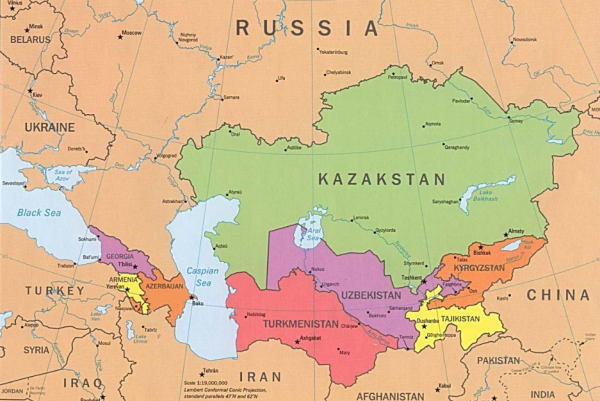


So, the Second Karabakh war has ended with the 10 November agreement between the leaders of Azerbaijan, Russia and Armenia. This agreement stipulates the unfolding of the 1,960-people-strong Russian peacekeeping mission within the greater part of the former Nagorno-Karabakh Autonomous Region and Lachin corridor that connects it with Armenia. This clause, which means the appearance of the Russian militaries in their legitimate capacity on the Azerbaijani territory for the first time since 1992 (excluding the staff of the Gabala Radio Location station, closed in 2012, which did not represent a major political issue for Azerbaijan), has received a mixed reaction in Azerbaijan which has long been taking a principled position on the presence of foreign troops. However, there has hardly been any better option right now, mainly for the following reasons.
First, the presence of some kind of armed peacekeepers has been inevitable anyway, and Azerbaijan, which has carefully built an image of a reliable partner playing by the rules, would not have risked being widely accused of ethnic cleansing. At the same time, even in case of a hypothetical liberation of all the occupied territories by force, Armenia would have hardly accepted any peace deal without a similar mission installed and could have made the re-settlement and infrastructural development of these areas nearly impossible by constant armed provocations. So, a mediated ceasefire with international guarantees for the Armenian community of Karabakh was the only viable outcome, but the question remains- whether there were opportunities other than Russia?
For many years, it was supposed that such a mission would be organized and deployed by 3 co-chair countries of the Minsk Group- Russia, the U.S. and France. After the meeting with Foreign Ministers of Armenia and Azerbaijan, the American side made an extremely vague proposal of “Scandinavian peacekeepers”. Neither of them was realistic, however. A peacekeeping mission in the area of such a bitter and prolonged conflict must rely on a considerable base of power and willingness to use it, as well as the readiness to get in quite muddy waters. Western countries had not been ready to mobilize such power either for want of motivation or for their unwillingness to interfere and risk challenging Russia in the South Caucasus. That’s why President Macron, for all his statements of concern and calls for action, has done virtually nothing to impact the events on the ground. At the same time, the recent problems in the EU-Turkey relations has made Moscow a more comfortable partner for President Erdogan in the South Caucasus than Brussels, thoroughly limiting the European opportunities to influence the parties to the conflict.
Secondly, the uncooperative position taken by Armenia on the Nagorno-Karabakh problem in recent years has also made other options unfortunately untenable. Although both parties had earlier expressed concerns about the possibility of a peacekeeping mission deployment, for Yerevan it had been one of the pretexts to prolong the status-quo and avoid substantive negotiations. Earlier on, the option of a lighter, Kosovo-style international police mission for the future of Nagorno-Karabakh had been discussed, but it would have been possible only if Armenia had voluntarily agreed to return the 7 adjacent regions to Azerbaijan without preconditions and agree on a compromise on the status of Nagorno-Karabakh itself. However, the Armenian Parliament and wider political community consistently denied this option even after bitter defeats on the battlefield during the latest war and did not take a chance to engage in substantive negotiations upon humanitarian truce agreements reached 3 times during these 44 days. This stance made the urgent deployment of Russian peacekeepers the only available option to secure a comprehensive ceasefire and withdrawal of Armenian troops.